

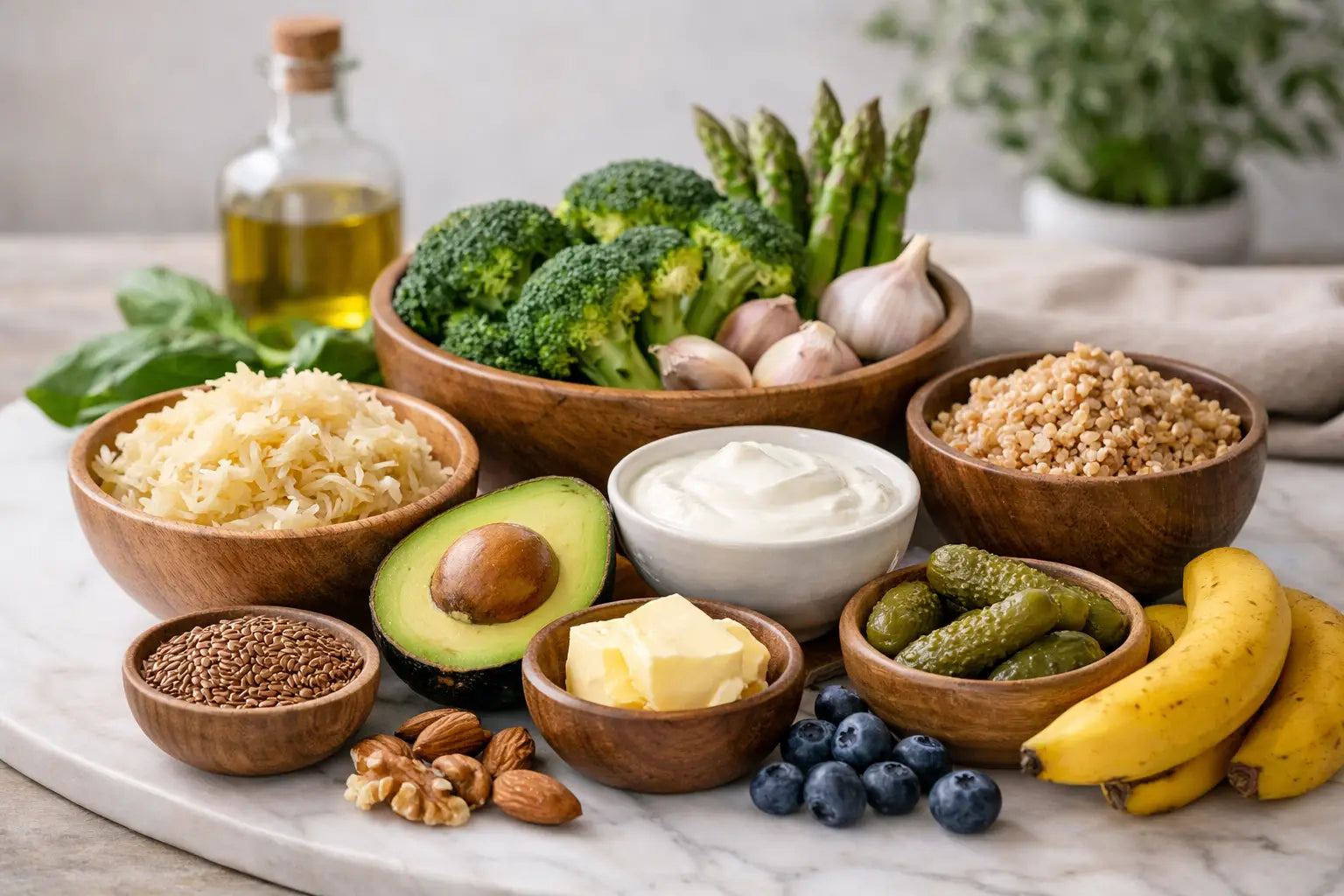
Your gut microbes can turn yesterday’s potato salad into fuel for your colon. That is not wellness hype. It is one of the most practical answers to how to increase butyrate naturally: eat the fibers your beneficial bacteria are built to ferment.
Butyrate is a short-chain fatty acid, a compound made when certain gut microbes ferment carbohydrates that make it through your small intestine undigested. Your colon cells use butyrate as a preferred energy source, and researchers are interested in its role in supporting the gut barrier, immune signaling, and a balanced intestinal environment. Think of it as a powerful output of a well-fed microbiome, not a nutrient most people need to chase in isolation.
The catch? Butyrate production is personal. Your food choices matter, but so does the current makeup of your microbiome, your usual fiber intake, medications, sleep, stress, and how quickly you increase high-fiber foods. The goal is not to flood your plate with fiber overnight. It is to give the right microbes more of what they need, consistently.
Why butyrate deserves a place on your wellness radar
Your digestive tract is not just a tube that processes lunch. It is home to trillions of microbes that interact with the foods you eat every day. When fiber-fermenting bacteria have enough fuel, they produce short-chain fatty acids including butyrate, acetate, and propionate.
Butyrate stands out because it is especially important in the colon. It helps nourish colon cells and may help support the mucus layer and tight junctions that act as part of the gut’s protective barrier. A stronger, well-supported barrier matters because your digestive system is constantly deciding what to absorb, what to block, and how to communicate with the immune system.
This is also why the conversation reaches beyond bathroom habits. Gut health can influence comfort, regularity, immune wellness, and the way you feel in your body. That does not mean butyrate is a magic fix for bloating, mood, or body composition. It means the daily inputs that support butyrate are worth taking seriously.
How to increase butyrate naturally: feed the fermentation
The most effective strategy is not eating more butter. Despite the name, dietary butter contains only small amounts of butyrate and does not reliably recreate what happens when your own microbes make it in the colon. Your bigger move is feeding the ecosystem that produces it.
Make resistant starch part of the rotation
Resistant starch is starch that resists digestion in the small intestine and arrives in the colon, where microbes can ferment it. It is one of the most exciting food tools for naturally supporting butyrate production.
Cooked and cooled potatoes, rice, oats, pasta, beans, and lentils can contain more resistant starch than their freshly cooked versions. You do not need to eat cold food forever. Reheating is fine, though some resistant starch remains after food has been cooled.
Try adding a scoop of cooled rice to a grain bowl, using overnight oats for breakfast, or keeping cooked lentils ready for salads. Greenish bananas and plantains can also contribute resistant starch, although they may be less appealing if you prefer sweeter fruit.
Start small if you are new to resistant starch. A major jump can bring gas or abdominal pressure, especially if your gut has been living on low-fiber convenience foods. That is feedback to adjust your pace, not proof that fiber is your enemy.
Eat more types of plants, not just more salad
A giant bowl of lettuce is not the same as a microbiome-building menu. Different microbes prefer different fibers, so variety matters. Beans offer fermentable fibers and resistant starch. Oats provide beta-glucan. Onions, garlic, asparagus, leeks, and Jerusalem artichokes contain prebiotic fibers such as inulin and fructans. Apples, berries, citrus, and vegetables add pectin and other helpful fibers.
A realistic target is to make plant diversity visible across the week. Instead of relying on one “healthy” side dish, rotate your staples: black beans one day, chickpeas the next; oats at breakfast, barley at dinner; berries in a smoothie, roasted Brussels sprouts with lunch.
If certain foods consistently cause significant discomfort, do not force them. Some people with irritable bowel syndrome or a sensitive gut react strongly to fermentable carbohydrates called FODMAPs. A registered dietitian can help you identify triggers without accidentally cutting out every fiber source that supports your microbiome.
Do not skip whole grains
Whole grains bring more to the table than a fiber number on a nutrition label. Their intact structure and diverse carbohydrates can help feed a wider range of microbes. Oats, barley, quinoa, brown rice, whole-wheat pasta, rye, and minimally processed corn are smart places to start.
The trade-off is simple: a sudden switch from refined grains to large servings of whole grains can feel rough on a sensitive gut. Blend, do not bulldoze. Mix brown and white rice at first, or combine half whole-wheat pasta with your usual pasta. Consistency beats the all-or-nothing reset.
Pair fiber with polyphenol-rich foods
Polyphenols are naturally occurring plant compounds found in colorful produce, cocoa, tea, coffee, herbs, and extra-virgin olive oil. They are not fiber, but they can interact with gut microbes in useful ways. Some polyphenol-rich foods may help favor beneficial bacterial activity, while microbes can also transform polyphenols into compounds your body can use.
Translation: add the berries, drink the unsweetened tea if it suits you, season food generously with herbs, and enjoy dark chocolate with a high cocoa content. This is a more interesting strategy than eating the same plain “gut health” meal on repeat.
Include fermented foods, with realistic expectations
Yogurt with live cultures, kefir, kimchi, sauerkraut, miso, and tempeh can introduce beneficial microbes or microbial byproducts into your routine. They are not direct butyrate factories, and not every fermented food contains the same live cultures by the time it reaches your fridge. Still, they can complement a fiber-rich pattern.
The best pairing is fermented foods plus prebiotic-rich plants. Probiotics need a welcoming environment. A serving of kefir alongside oats and berries, or tempeh with cooled rice and vegetables, gives your gut community both visitors and food.
The habits that can make the food strategy work better
Your microbiome responds to patterns, not a single heroic lunch. Regular meals, adequate hydration, movement, and sleep all help create conditions for digestion that feels more predictable. Exercise may support microbial diversity, while chronic stress and poor sleep can affect gut function and symptoms.
Avoid treating this as a perfection project. You do not need to eliminate every processed food, drink a gallon of water, and become a meal-prep machine by Monday. Pick one upgrade you can repeat: overnight oats three mornings a week, beans at two dinners, or one extra vegetable at lunch.
If your diet is currently low in fiber, increase gradually over two to four weeks and drink enough fluids. More fiber without enough water can worsen constipation for some people. If you have inflammatory bowel disease, a history of bowel obstruction, severe digestive symptoms, or unexplained weight loss, get individualized medical guidance before making aggressive fiber changes.
Where a tribiotic routine can fit
Food is the foundation, but supplements can be a convenient supporting player when life is busy. A tribiotic combines prebiotics, probiotics, and postbiotics, offering a broader approach than a single-strain probiotic alone. The Gut Gummy™ GG-360™ is designed around that full-spectrum idea in a simple daily gummy format.
Still, no gummy can replace the microbial fuel found in beans, oats, vegetables, fruit, and whole grains. Think of a gut-health supplement as a routine enhancer, not permission to leave fiber off the plate. The real win is making your daily habits easier to maintain.
A simple butyrate-friendly day of eating
Breakfast could be overnight oats with kefir, blueberries, chia seeds, and a slightly green banana. At lunch, build a bowl with cooled quinoa or rice, chickpeas, leafy greens, roasted vegetables, olive oil, and herbs. For dinner, try salmon or tempeh with barley and broccoli, followed by a square of dark chocolate if you want something sweet.
That is not a restrictive plan. It is a collection of microbial inputs: resistant starch, fermentable fibers, polyphenols, and fermented foods. Adjust portions to your preferences, energy needs, and tolerance.
The most gut-smart move is pleasantly unglamorous: keep giving your microbes a varied menu. A few more plants, a little resistant starch, and enough repetition for your gut to adapt can turn ordinary meals into meaningful support from the inside out.

By GG – your glam guide to gut health, dishing the microbiome gossip straight from the Upper Intestine
🗽✨
Read more

Microbiome health affects digestion, immune function, and more. Learn the everyday habits that help support a happier, more resilient gut from within.
This butyrate benefits guide explains how this gut-made postbiotic may support digestion, the gut barrier, immunity, and everyday metabolic health, too.
Leave a comment
All comments are moderated before being published.
This site is protected by hCaptcha and the hCaptcha Privacy Policy and Terms of Service apply.