

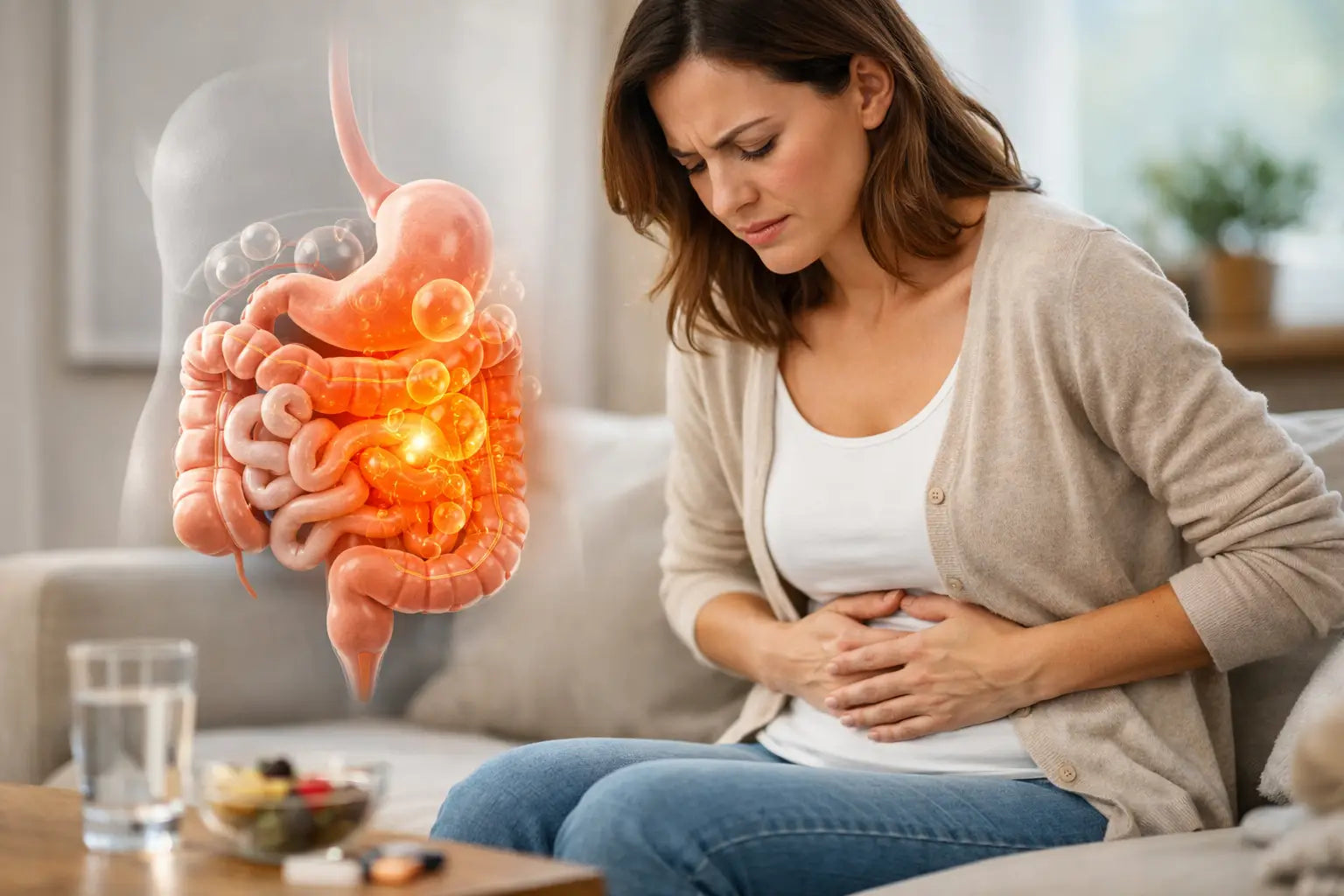
That swollen, stretched, “why do my jeans suddenly hate me?” feeling has a name: bloating. It can show up after a huge meal, a salad, a stressful workday, or seemingly for no reason at all. The frustrating part is that bloating is a symptom, not a single condition. Your gut is responding to something, and the fastest path to feeling better is learning to spot the pattern.
A little occasional bloating is common. Persistent, painful, or disruptive bloating deserves a closer look. Your digestive system is home to trillions of microbes, constantly breaking down food, producing compounds, and communicating with your immune system and brain. When that ecosystem, your habits, or your food choices get thrown off, your midsection may be the first place you feel it.
What Bloating Actually Is
Bloating is the sensation of fullness, pressure, or tightness in the abdomen. Sometimes your stomach visibly expands. Sometimes it does not, but it still feels uncomfortable enough to make you rethink dinner plans.
Gas is often part of the equation, but it is not the whole story. Bloating can also involve changes in how your gut moves food along, fluid retention, constipation, food sensitivities, hormonal shifts, or increased sensitivity in the gut-brain connection. That is why two people can eat the same meal and have completely different outcomes.
The goal is not to fear every food that causes a little gas. Many highly nutritious foods, including beans, onions, garlic, whole grains, and certain fruits, contain fibers that your gut microbes ferment. Fermentation can create gas, yes, but it also produces beneficial short-chain fatty acids that help support the gut lining and overall digestive health. The question is whether your body is adapting well or sending a signal that something needs to change.
Common Reasons You Feel Bloated
You ate fast, distracted, or on the run
Your digestive process starts before food reaches your stomach. Chewing breaks food down, while eating slowly gives your body time to coordinate digestion. When you inhale a lunch between meetings, chew gum all afternoon, sip carbonated drinks, or eat while stressed, you can swallow more air than you realize.
Try giving meals a little more runway. Sit down when possible, chew thoroughly, and take a few breaths before the first bite. It sounds almost too simple, but your nervous system and digestive system are closely connected.
Constipation is backing things up
If stool is moving slowly through the colon, gas has less room to move out. The result can be pressure, fullness, and a belly that feels larger by the end of the day. Many people think they are regular because they go every day, but hard stools, straining, incomplete emptying, or going fewer than three times a week can all point to constipation.
Hydration, consistent movement, and gradual fiber intake can help. The word gradual matters. Going from low fiber to an enormous salad, bran cereal, and a fiber supplement overnight can make bloating worse before your gut has time to adjust.
Certain carbohydrates are fermenting fast
Some carbohydrates are more likely to be fermented by gut bacteria in the large intestine. For people with sensitive digestion, foods such as dairy, legumes, wheat, apples, cauliflower, onions, garlic, and sugar alcohols may trigger symptoms. These foods are not automatically “bad.” They may simply be poorly tolerated in a certain amount, at a certain time, or during a period when your digestion is already off.
Instead of cutting out everything at once, look for repeatable patterns. Does discomfort happen after milk but not hard cheese? After a large serving of beans but not a smaller portion? After protein bars or sugar-free gum containing sugar alcohols? Specific clues are more useful than broad food fear.
Your microbiome may be out of balance
Your gut microbiome helps process dietary fibers and influences the compounds produced during digestion. Antibiotics, illness, travel, a low-fiber diet, poor sleep, ongoing stress, and major dietary changes can all affect that ecosystem.
This does not mean every bloated day is “dysbiosis.” That term gets thrown around too casually. But supporting a diverse, well-fed microbial community can be a smart long-game strategy for people who want more predictable digestion. That means varied plant foods, enough fluids, regular meals, and a supplement approach that makes sense for your body.
Hormones and stress are in the mix
For many women, bloating can rise and fall with the menstrual cycle. Hormonal changes may affect fluid retention and how quickly the digestive tract moves. Stress can also change gut motility and make normal digestive sensations feel louder. Your brain and gut are in constant conversation, so a tense week can absolutely show up below the rib cage.
If your symptoms predictably worsen around your period, tracking your cycle alongside meals and bowel habits can reveal useful context. If the pattern is new, severe, or progressively worse, talk with a clinician rather than assuming it is just hormones.
How to Get Relief Without Overcorrecting
When you feel bloated, the temptation is to skip meals, slash all carbs, or chase a harsh cleanse. Usually, that is not the move. Your gut responds better to consistency than chaos.
Start with gentle actions: take a short walk after eating, drink water throughout the day, and avoid piling a carbonated beverage onto a meal that already tends to make you uncomfortable. A warm drink and light movement can be especially helpful when you feel sluggish or constipated.
Then zoom out. Keep a simple note for one or two weeks with meal timing, major foods, stress level, sleep, bowel movements, cycle timing if relevant, and symptoms. You are not trying to micromanage your life. You are looking for trends. A pattern that repeats three times is more meaningful than one random uncomfortable afternoon.
If you want to increase fiber, do it in small increments and pair it with water. Aim for food diversity rather than treating one “superfood” as a fix. Add berries to breakfast, rotate vegetables, include beans in modest portions, or try oats and chia if they agree with you. A wider variety of plant foods gives different gut microbes different fuel.
Where Gut Supplements Fit In
Probiotics can be helpful for some people, but they are not interchangeable and they are not a cure-all. Benefits can depend on the specific strain, dose, your current symptoms, and the rest of your routine. Some people also notice temporary gas or bloating when starting a new probiotic or increasing fermentable fibers. That is one reason to introduce one change at a time.
A broader tribiotic approach combines prebiotics, probiotics, and postbiotics. Prebiotics help feed beneficial microbes, probiotics add live microorganisms, and postbiotics are beneficial compounds produced through microbial activity. The idea is compelling because gut health is bigger than one bacterial strain. Still, more is not always better. If you have a sensitive gut, start slowly and pay attention to how you feel.
The Gut Gummy™ is designed around this full-spectrum, daily-habit approach, for people who want microbiome support without turning their supplement shelf into a science project. Think of any gut supplement as support for the foundations, not a replacement for meals, sleep, hydration, movement, or medical care when symptoms call for it.
When Bloating Needs a Medical Conversation
Bloating that comes and goes after certain meals is often manageable. But do not ignore symptoms that are persistent, worsening, or changing your quality of life. Make an appointment with a healthcare professional if bloating lasts for weeks, repeatedly wakes you up, or comes with ongoing constipation, diarrhea, vomiting, unexplained weight loss, blood in stool, fever, pelvic pain, or feeling full very quickly when eating.
Seek urgent care for severe or sudden abdominal pain, a rigid or very tender abdomen, repeated vomiting, black or bloody stools, fainting, or an inability to pass stool or gas with significant swelling. Those symptoms need prompt evaluation.
There is no prize for pushing through a body that is clearly asking for attention. Bloating can be ordinary, but it should not have to become your normal. Get curious, make small changes with consistency, and let the patterns guide your next move.

By GG – your glam guide to gut health, dishing the microbiome gossip straight from the Upper Intestine
🗽✨
Read more

Learn how to reduce bloating naturally with food, movement, hydration, and microbiome-friendly habits that help your gut feel calmer from morning to night.

Debloating starts with finding your personal triggers. Learn practical food, movement, and gut-health habits that can help you feel comfortable again.
Leave a comment
All comments are moderated before being published.
This site is protected by hCaptcha and the hCaptcha Privacy Policy and Terms of Service apply.