

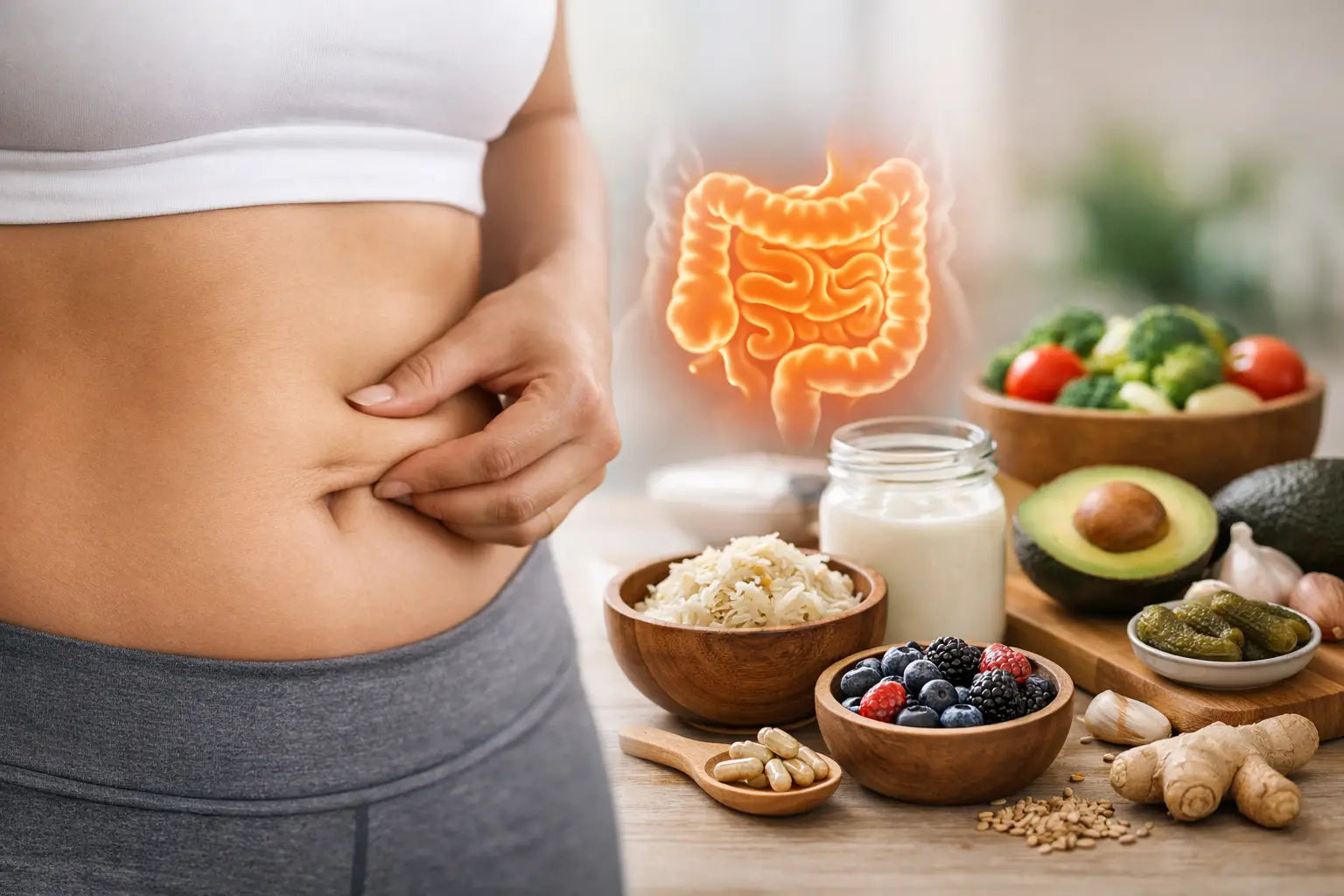
A tighter waistband after lunch can feel like belly fat appeared overnight. Usually, it did not. That sudden, uncomfortable shift is more often bloating, constipation, water retention, or a meal your gut is still working through. Still, gut health and belly fat do share a real connection - just not the quick-fix version social media loves to sell.
Your gut is home to trillions of microbes that help break down food, produce beneficial compounds, support the gut barrier, and communicate with systems involved in appetite, metabolism, inflammation, and immune function. When that internal ecosystem is supported, healthy habits can feel easier to maintain. When it is out of balance, digestion can get noisier, energy can feel less steady, and body-composition goals may feel more frustrating.
Gut health and belly fat are connected, but not identical
First, separate two things that are often lumped together: bloating and body fat. Bloating is a temporary feeling of fullness, pressure, or visible distension in the abdomen. It can change over hours or days. Belly fat, especially visceral fat stored deeper around the organs, develops over time through a mix of calorie intake, activity, sleep, stress, genetics, hormones, age, medications, and metabolic health.
A better gut will not melt fat from one area of your body. Spot reduction is not how human physiology works. But a supported gut may help address some of the habits and signals that influence long-term weight management: regular digestion, fullness after meals, blood-sugar steadiness, food tolerance, and the ability to eat a fiber-rich diet without feeling wrecked by it.
That distinction matters. Chasing a flatter stomach by cutting every carbohydrate, skipping meals, or taking harsh laxatives can make digestion worse. The smarter goal is less drama in your gut and more consistency in the routines that support your whole body.
Your microbiome may influence metabolic signals
The microbiome is not a magic metabolism switch. It is a busy ecosystem, and researchers are still mapping its role in body weight. Even so, the science points to several practical pathways worth understanding.
Fiber-feeding microbes make helpful compounds
When beneficial gut microbes ferment certain fibers, they produce short-chain fatty acids, including butyrate. These compounds help nourish cells lining the colon and may play a role in gut-barrier function, inflammation signaling, and metabolic regulation. Translation: the plants on your plate are not just feeding you. They are feeding the microbes that help support your gut.
People who eat more varied plant foods often have more diverse microbial communities. That does not mean you need an expensive “gut reset” or a refrigerator full of obscure powders. Beans, oats, berries, leafy greens, lentils, apples, onions, garlic, nuts, seeds, and whole grains all count.
The gut and appetite are always talking
Your digestive tract sends messages to your brain before, during, and after meals. Those messages influence hunger, satisfaction, cravings, and how long you stay full. Protein, fiber, meal volume, sleep quality, stress, and the makeup of your gut microbiome can all affect that conversation.
This is one reason a high-fiber breakfast with protein tends to feel different than a pastry and coffee. The first option usually supports steadier energy and fullness. The second may be delicious, but it can leave some people hunting for snacks by midmorning. No food needs to be banned. The pattern across your week matters more than one breakfast.
Chronic stress can show up in your stomach
Ever had a stressful week and suddenly felt backed up, bloated, ravenous, or unable to eat much? That is not a lack of willpower. The gut-brain connection is real. Stress can influence motility, food choices, sleep, and the perception of digestive discomfort. It can also make regular routines feel impossible.
If stress is high, a perfect meal plan is rarely the first move. Start smaller: a 10-minute walk after dinner, a consistent bedtime, slower meals without scrolling, or a few minutes of breathing before you eat. Boring? Maybe. Effective? Very often.
Why “fix your gut to lose belly fat” is too simplistic
The wellness industry can make the microbiome sound like the missing key to every body concern. It is not. If your goal is fat loss, the fundamentals still matter: sustainable nutrition, adequate protein, resistance training, daily movement, sleep, and a calorie intake that fits your needs over time.
Gut support helps because it can make those fundamentals more livable. A person dealing with frequent constipation may avoid fiber. Someone who crashes after poorly balanced meals may struggle with late-night snacking. Someone who sleeps badly and feels stressed may crave fast energy and have less capacity to cook or exercise. These are not character flaws. They are useful clues.
It also depends on your starting point. If you already eat plenty of plants, hydrate, move regularly, and have no digestive symptoms, adding more supplements may create only a modest change. If your diet is low in fiber and your digestion is inconsistent, gradual food and lifestyle changes may make a more noticeable difference.
Build a gut-friendly routine that supports body goals
The most effective approach is refreshingly unglamorous: give your gut a consistent environment and give your body enough time to respond. Avoid trying to change everything on Monday morning. Choose one or two habits, repeat them, then build.
Eat more plant variety, slowly
Aim to include a wider range of plant foods across the week. Variety matters because different microbes prefer different fibers and plant compounds. If you currently eat very little fiber, increase it gradually. Going from almost no beans to a giant bowl of chili can create a level of gas that makes your new health plan feel personally offensive.
Pair extra fiber with water, and give your system a week or two to adapt. A simple starting point could be oats at breakfast, fruit as a snack, and a serving of beans or vegetables at dinner.
Prioritize protein and satisfying meals
Protein supports lean muscle, which matters for healthy body composition, especially when you are losing weight. It also helps meals feel more satisfying. Combine protein with fiber and healthy fats when possible: Greek yogurt with berries and chia, eggs with vegetables and whole-grain toast, or salmon with roasted vegetables and rice.
There is room for treats. The goal is not food anxiety. It is building meals that keep your energy and appetite from swinging wildly all day.
Move after meals and lift regularly
A short walk after eating can support digestion and help your body manage post-meal blood sugar. It does not need to be an intense workout. Ten to 15 minutes is a powerful, realistic habit.
For belly-fat goals, add resistance training if it is accessible to you. Muscle is metabolically active tissue, and strength training helps preserve it during weight loss. Start with bodyweight movements, dumbbells, machines, or a program you genuinely enjoy enough to repeat.
Treat sleep as a metabolism habit
One short night will not derail your progress. A chronic sleep debt can. Poor sleep tends to make hunger louder, cravings sharper, training harder, and stress less manageable. Build a repeatable wind-down routine and target a bedtime that gives you enough sleep most nights, not just on weekends.
Consider tribiotic support as a complement
Prebiotics feed beneficial microbes, probiotics add selected live strains, and postbiotics are beneficial compounds produced through microbial activity. Together, this tribiotic approach is designed to support a more complete gut-health strategy than a single-function probiotic alone. A convenient option such as The Gut Gummy™ can fit into a daily routine, but it works best alongside food, movement, sleep, and stress support - not as a substitute for them.
When belly discomfort deserves a closer look
Do not write off every stomach symptom as “bad gut health.” Persistent or severe abdominal pain, blood in stool, unexplained weight loss, ongoing diarrhea or constipation, vomiting, fever, or a major change in bowel habits deserves medical attention. The same goes for bloating that is new, frequent, or disruptive.
For everyday discomfort, keeping a short symptom-and-food journal can be useful. Look for patterns, not perfection. You may notice that eating quickly, drinking less water, having large amounts of certain foods, or stressful days affect you more than any single ingredient.
Your gut does not need punishment to change. It needs consistent signals: more plants, enough protein, movement you can sustain, sleep that restores you, and a little patience. That is how you support a calmer belly now while building habits that can genuinely support your long-term body goals.

By GG – your glam guide to gut health, dishing the microbiome gossip straight from the Upper Intestine
🗽✨
Read more
Supplements for bloating relief can help when matched to the cause. Learn which ingredients may support digestion, comfort, and a healthier gut daily.
Postbiotics vs probiotics supplement options explained: learn how live microbes and beneficial compounds differ, and how to choose support for your gut.
Leave a comment
All comments are moderated before being published.
This site is protected by hCaptcha and the hCaptcha Privacy Policy and Terms of Service apply.