

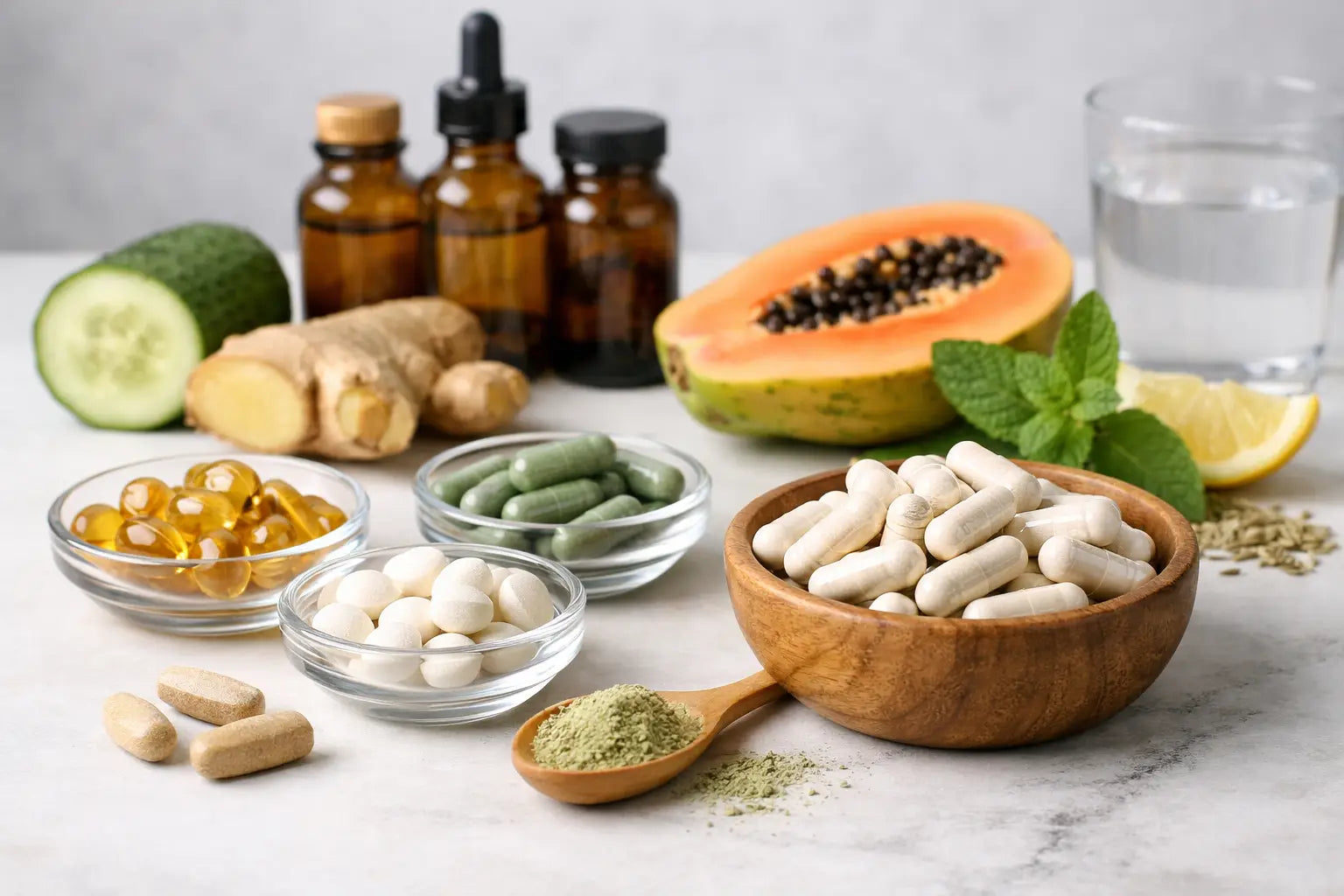
That tight, overfull feeling after a meal is not always about eating too much. Bloating can show up after a perfectly normal lunch, during travel, around your period, or when your digestion is simply not moving at its usual pace. The best supplements for bloating relief are not one-size-fits-all fixes. They work best when you match the ingredient to what is actually driving the discomfort.
Sometimes bloating is trapped gas. Sometimes it is constipation, a sudden jump in fiber, a food sensitivity, stress, or shifts in the gut microbiome. That distinction matters because a supplement that helps one kind of bloating can make another kind worse. More fiber, for example, is not always the move when your gut already feels like a balloon.
Start With the Cause, Not the Hype
Your gut is home to trillions of microbes that help process food, produce helpful compounds, and communicate with systems throughout the body. When that ecosystem is out of rhythm, digestion can feel it first: irregularity, excess gas, discomfort, and visible bloating.
Before adding anything new, look for patterns. Does bloating happen after dairy, high-fiber meals, beans, or carbonated drinks? Is it strongest before your period? Do you also deal with constipation, loose stools, or heartburn? A few days of notes can make the supplement aisle much less confusing.
Here are seven options worth knowing, including where each may fit and where to be careful.
7 Supplements for Bloating Relief
1. Probiotics for ongoing gut support
Probiotics are live microorganisms that may support a more balanced gut ecosystem. Certain strains have been studied for occasional gas, abdominal discomfort, and irregular bowel patterns, but strain matters more than the giant number printed on the label. A product with 100 billion organisms is not automatically better than one with fewer, well-researched strains.
Probiotics tend to make the most sense for recurring bloating rather than a one-night emergency. Give a new formula time, usually several weeks, and introduce it slowly. Some people experience temporary extra gas in the first week or two as their gut adjusts. If it keeps getting worse, that formula may not be your fit.
2. Prebiotic fiber when low fiber is the real issue
Prebiotics feed beneficial gut microbes. Ingredients such as inulin, fructooligosaccharides, and partially hydrolyzed guar gum can support regularity and microbial diversity over time. That is valuable because a well-fed microbiome can produce short-chain fatty acids, compounds linked to the health of the gut lining and digestive function.
The trade-off is real: prebiotics can cause more gas when you start too aggressively. If you are already bloated, begin with a low dose and increase gradually. Partially hydrolyzed guar gum is often gentler than some highly fermentable fibers, but individual tolerance still wins.
3. Postbiotics and tribiotics for a broader approach
Postbiotics are beneficial compounds created when microbes ferment fiber. Unlike live probiotics, they do not depend on surviving the journey through your digestive tract. They can be a smart option for people who want microbiome support but are sensitive to traditional probiotic formulas.
A tribiotic combines prebiotics, probiotics, and postbiotics in one daily routine. The idea is simple: support beneficial microbes, feed them, and include the useful compounds they produce. A full-spectrum formula like The Gut Gummy™ GG-360™ is designed around that wider ecosystem approach, rather than treating gut health as a single-strain probiotic problem.
This is not a magic erase button for a heavy meal. It is a consistency play for people whose bloating is part of a larger pattern involving digestion, regularity, and gut balance.
4. Peppermint oil for cramping and gas-related discomfort
Enteric-coated peppermint oil is one of the better-known herbal options for occasional abdominal discomfort, especially when bloating comes with cramping. The coating matters because it helps the oil reach the intestines before dissolving, where it may help relax intestinal muscle.
Peppermint oil is not ideal for everyone. It can worsen reflux or heartburn in some people, particularly if the capsule is not enteric-coated. If your bloating usually comes with a burning sensation in your chest, this is probably not the first supplement to test.
5. Digestive enzymes for specific food triggers
Digestive enzymes help break down components of food. Lactase can help people who bloat after dairy, while alpha-galactosidase may help with gas from beans, lentils, and certain vegetables. These are targeted tools, not daily proof that your digestion is broken.
Enzyme blends are often marketed as a cure-all, but they are most useful when you know the trigger. If dairy consistently leaves you uncomfortable, lactase before that meal may be practical. If every food causes bloating, an enzyme blend may only mask a bigger issue worth investigating.
6. Ginger for sluggish, post-meal fullness
Ginger has a long history in digestive wellness, and research suggests it may support gastric motility - the pace at which the stomach moves food along. That can make it appealing for the person who feels uncomfortably full long after eating.
Ginger capsules, chews, or standardized extracts may be useful for occasional post-meal heaviness. Pay attention to dose and other medications, especially blood thinners. And skip the assumption that more spicy ginger equals better results. A reliable, consistent dose is the better strategy.
7. Magnesium when constipation is part of the picture
If bloating arrives with infrequent, hard-to-pass stools, constipation may be the engine behind the pressure. Certain forms of magnesium can draw water into the intestines and support bowel movements. Magnesium citrate is commonly used for this purpose, while magnesium glycinate is generally chosen for other wellness goals and may have less of a laxative effect.
Use this category thoughtfully. Too much magnesium can lead to urgency, loose stools, and cramps, which is not exactly the plot twist anyone wants. People with kidney disease should check with a clinician before using magnesium supplements.
How to Choose Without Creating More Bloating
The fastest way to turn a promising supplement into a frustrating experiment is to start three at once. You will not know what is helping, what is causing side effects, or whether your symptoms are simply changing on their own.
Choose one approach based on your most obvious pattern. For recurring, broad digestive support, consider a probiotic or tribiotic. For a known meal trigger, choose a targeted enzyme. For constipation-related pressure, focus on hydration, movement, and a carefully selected magnesium or gentle fiber strategy.
Start at the lowest suggested serving when possible, particularly with prebiotic fiber and microbiome formulas. Give your body a fair adjustment window, then assess the trend rather than judging one meal or one day. Your gut likes consistency more than chaos.
Also remember that supplements work better when the basics are not working against them. Eating very quickly, chewing gum all day, drinking carbonated beverages, suddenly doubling your fiber intake, and sitting still after every meal can all contribute to bloating. A 10-minute walk after eating is wonderfully unglamorous and often genuinely helpful.
When Bloating Needs More Than a Supplement
Occasional bloating is common. Persistent, severe, or rapidly worsening bloating deserves more attention. Talk with a healthcare professional if symptoms come with unintentional weight loss, blood in the stool, fever, vomiting, severe pain, ongoing diarrhea or constipation, trouble swallowing, or a significant new change in your digestion.
If you are pregnant, managing a health condition, or taking prescription medication, get personalized guidance before adding a new digestive supplement. That is not being overly cautious. It is smart self-optimization.
Your best next step may be surprisingly simple: notice your pattern, choose one targeted tool, and give your gut room to respond. Relief is not about throwing every powder and capsule at your stomach. It is about building a daily rhythm your gut can actually work with.

By GG – your glam guide to gut health, dishing the microbiome gossip straight from the Upper Intestine
🗽✨
Read more

Looking for the best gummies for bloating? Learn which ingredients may support digestion, what to avoid, and how to choose a smarter daily gummy routine.

Learn how gut health and belly fat connect, why bloating is not body fat, and the everyday food, sleep, stress, and movement habits that support balance.
Leave a comment
All comments are moderated before being published.
This site is protected by hCaptcha and the hCaptcha Privacy Policy and Terms of Service apply.