

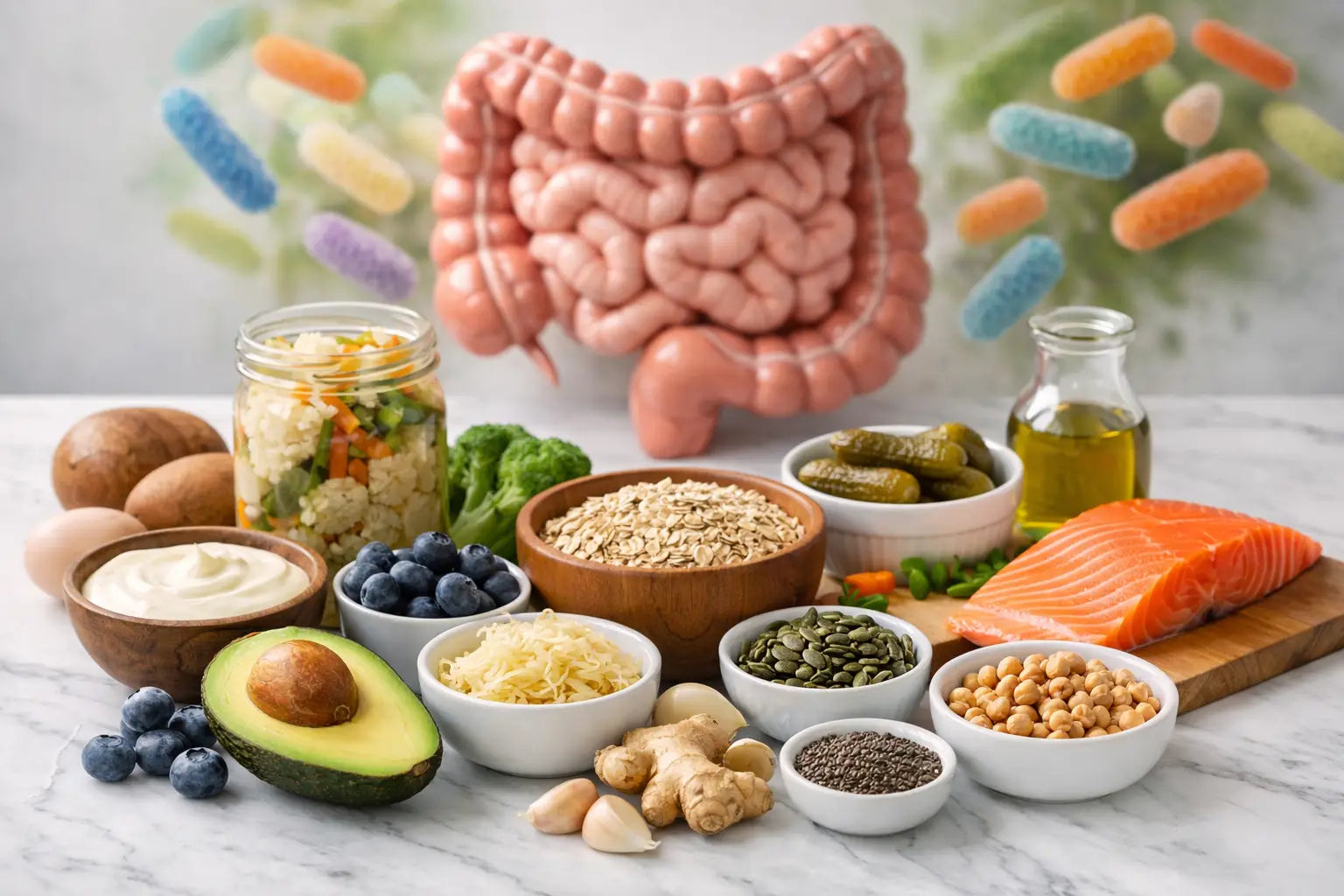
Your gut is not asking for another random wellness hack. It is asking to be fed well, consistently, and with enough variety to keep your internal ecosystem thriving. That is where healthy gut microbiome foods come in. The right foods do more than support digestion - they help nourish the bacteria linked to immune function, mood balance, regularity, and even how your body responds to inflammation.
The exciting part is that you do not need a perfect diet or a fridge full of niche powders to make progress. A stronger microbiome usually starts with ordinary foods, eaten often, in combinations that support both the microbes themselves and the environment they live in. Think less detox fantasy, more smart daily inputs.
What healthy gut microbiome foods actually do
Your microbiome is a crowded, active community of bacteria and other microbes living mostly in your large intestine. Some strains help break down fiber, produce beneficial compounds like short-chain fatty acids, and support the gut barrier. Others are less helpful when they dominate. Food influences which groups get fed.
That is why healthy gut microbiome foods tend to fall into a few big categories. Some deliver fiber that good bacteria ferment. Some contain live microbes. Some provide plant compounds that appear to support microbial diversity. And some help indirectly by reducing the dietary patterns that can throw the gut out of balance.
There is no single miracle food here. Diversity matters more than obsession. If you only eat yogurt and call it a gut health plan, you are leaving a lot on the table.
12 healthy gut microbiome foods worth eating regularly
1. Yogurt with live active cultures
Yogurt is the gateway food for a reason. It can provide beneficial bacteria, and it is easy to fit into real life. The catch is that not every yogurt is equally useful. Highly sweetened versions may still contain live cultures, but they also pile on sugar that does not exactly help your overall health goals.
Plain or lightly sweetened yogurt with live active cultures is the better play. If dairy does not work for you, a cultured non-dairy option can still be useful, but check the label for actual live strains.
2. Kefir
If yogurt is the intro course, kefir is the more advanced option. It is a fermented drink that often contains a wider range of microbes than yogurt. Some people find it easier to digest than milk, though it depends on the person.
Kefir is especially practical for people who want gut support in a grab-and-go format. It is not magic, but it is one of the more efficient food-based ways to get live cultures into your routine.
3. Sauerkraut
Real sauerkraut is fermented cabbage, not just cabbage sitting in vinegar. When it is unpasteurized, it may provide live bacteria alongside fiber and fermentation byproducts that support gut health.
A small serving goes a long way. If you are new to fermented foods, start modestly. More is not always better, especially if your gut is sensitive or you are prone to bloating.
4. Kimchi
Kimchi brings many of the same benefits as sauerkraut, with extra variety from ingredients like garlic, ginger, radish, and chili. That matters because different plant foods deliver different fibers and compounds, and your microbes like options.
Spice can be a trade-off. If spicy foods trigger symptoms for you, kimchi may not be your best first move even if it looks great on a gut health list.
5. Beans and lentils
This is where the microbiome conversation gets real. Beans and lentils are rich in fiber and resistant starch, which feed beneficial gut bacteria. They are also affordable, filling, and better for long-term gut support than most trendy snack foods marketed as wellness essentials.
Yes, they can cause gas at first. That does not automatically mean they are bad for you. It may mean your gut needs time to adapt. Smaller portions, good hydration, and gradual increases usually work better than going from zero fiber to a bean festival overnight.
6. Oats
Oats contain beta-glucan, a type of soluble fiber associated with heart health and helpful effects in the gut. They also act as an easy base for adding more microbiome-friendly foods like berries, chia seeds, or yogurt.
Instant oats can still be useful, but less processed versions may offer a slower digestive response. The bigger issue is usually what gets added on top. Oats loaded with sugary syrups and dessert-style toppings lose some of their gut-friendly edge.
7. Bananas
Bananas, especially slightly green ones, contain resistant starch that can feed good bacteria. They are also one of the easiest gut-supportive foods to keep around.
If ripe bananas sit better for you, eat ripe bananas. The best gut food is not the one with the most impressive science headline. It is the one you can tolerate and actually eat consistently.
8. Berries
Blueberries, raspberries, blackberries, and strawberries bring fiber plus polyphenols, which are plant compounds your gut microbes can interact with in beneficial ways. Berries are one of those rare foods that feel like a wellness flex and are fully backed by common sense.
Fresh or frozen both work. What matters more is regular intake than chasing peak-season perfection.
9. Garlic
Garlic contains compounds that act like prebiotics, meaning they help feed beneficial bacteria already living in the gut. It also adds flavor, which means it can improve the microbiome potential of your meals without requiring a separate ritual.
That said, garlic can be tough for some people with IBS or sensitivity to certain fermentable carbs. If it leaves you feeling worse, that is not failure. It is data.
10. Onions
Like garlic, onions provide prebiotic fibers that can support beneficial bacteria. They are one of the simplest ways to build more gut support into everyday cooking.
Raw onions are more intense and may trigger symptoms in some people, while cooked onions are often easier to handle. Your microbiome plan should work with your digestion, not against it.
11. Asparagus
Asparagus is another prebiotic-rich vegetable with fiber that supports microbial fermentation in the colon. It is not the trendiest produce item, but your gut does not care about trends.
Roasted, grilled, or chopped into eggs or grain bowls, asparagus is an easy rotation food. Variety is part of the strategy, and this is a smart one to keep in circulation.
12. Apples
Apples offer fiber, especially pectin, along with polyphenols that may benefit the gut microbiome. They are portable, familiar, and useful for people who want gut-friendly choices without overhauling their lives.
Whole apples are better than juice for obvious reasons. Your microbes want the fiber. The filtered sugar water version is not the same deal.
How to eat healthy gut microbiome foods without wrecking your stomach
Here is where people get too aggressive. They read one article about fiber, buy chia, kefir, kimchi, beans, and broccoli in a single grocery trip, then wonder why their gut feels like a protest zone.
The smarter move is to build gradually. Add one or two healthy gut microbiome foods at a time, keep portions reasonable, and give your system a week or two to adjust. Your gut microbes need time to respond, and your digestive comfort matters.
Hydration also matters more than people think. Increasing fiber without drinking enough water can make regularity worse, not better. If you are trying to improve digestion, food and fluids have to work together.
Food first, but not food only
A strong microbiome is not built by food alone. Sleep, stress, movement, and unnecessary antibiotic exposure all shape the gut environment too. If your routine is built on ultra-processed meals, poor sleep, and constant stress, adding a spoonful of sauerkraut will not fully cancel that out.
This is also where convenience matters. Plenty of people know what they should eat but struggle to do it consistently. That is one reason the gut health space has moved beyond old-school single-strain probiotics and toward more comprehensive support. A tribiotic approach that combines prebiotics, probiotics, and postbiotics can make sense when your diet is improving but not perfect, which is basically real life.
When healthy gut microbiome foods are not enough
If you deal with ongoing bloating, constipation, diarrhea, reflux, or stomach pain, more fermented food is not always the answer. Sometimes symptoms point to food intolerances, IBS, medication effects, or other issues that need a more personalized plan.
Gut health is powerful, but it is not a guessing game you have to play forever. If foods that are supposed to help consistently make you feel worse, pay attention to that pattern.
The best gut routine is rarely the flashiest one. It is the one you can repeat on a busy Tuesday, after bad sleep, during travel, and in the middle of normal life. Start with a few healthy gut microbiome foods, stay consistent, and let your daily choices do the heavy lifting. Your gut notices more than your social feed does.

By GG – your glam guide to gut health, dishing the microbiome gossip straight from the Upper Intestine
🗽✨
Read more
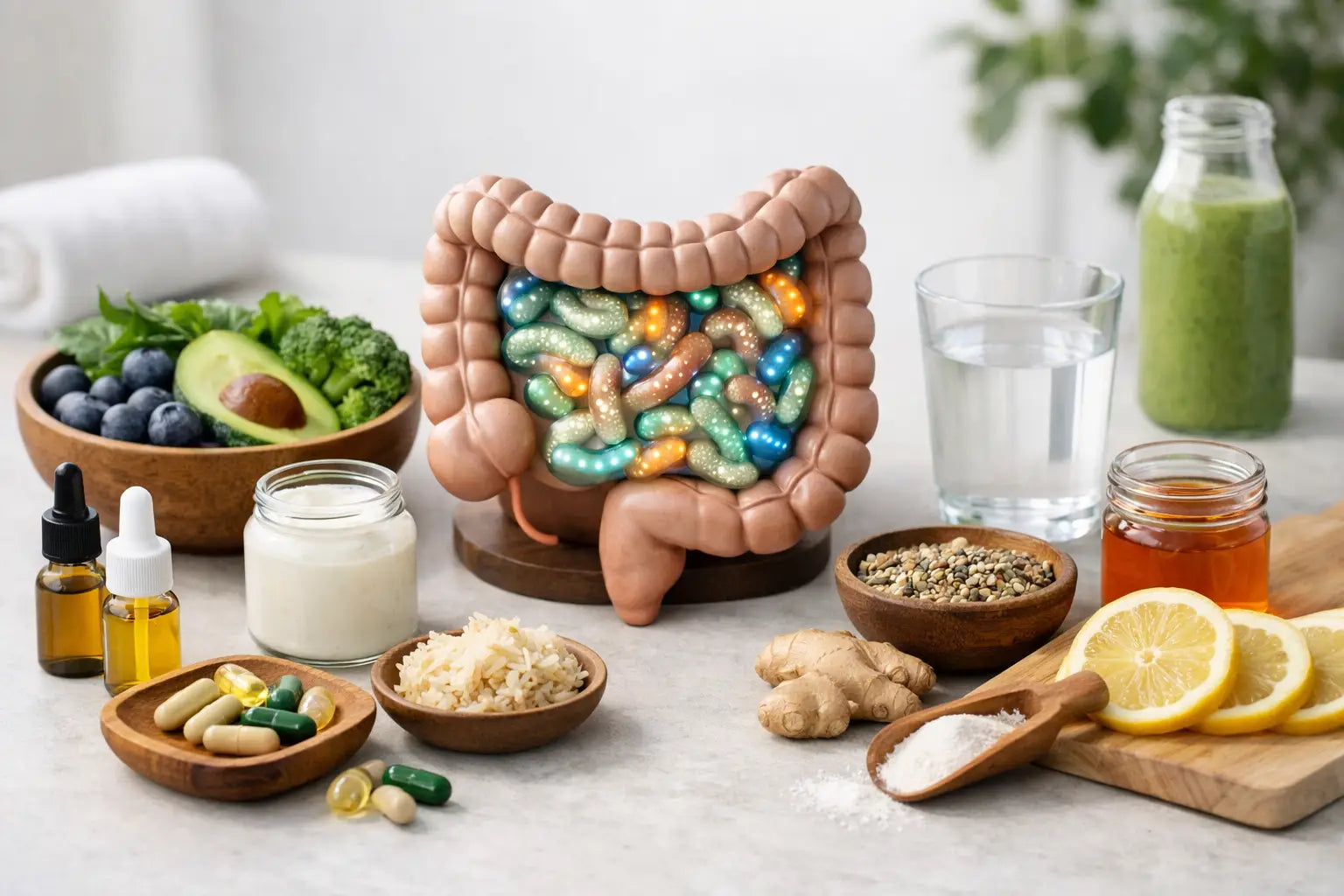
Learn practical ways to improve your gut microbiome with food, sleep, stress support, and smarter daily habits that benefit digestion and beyond.
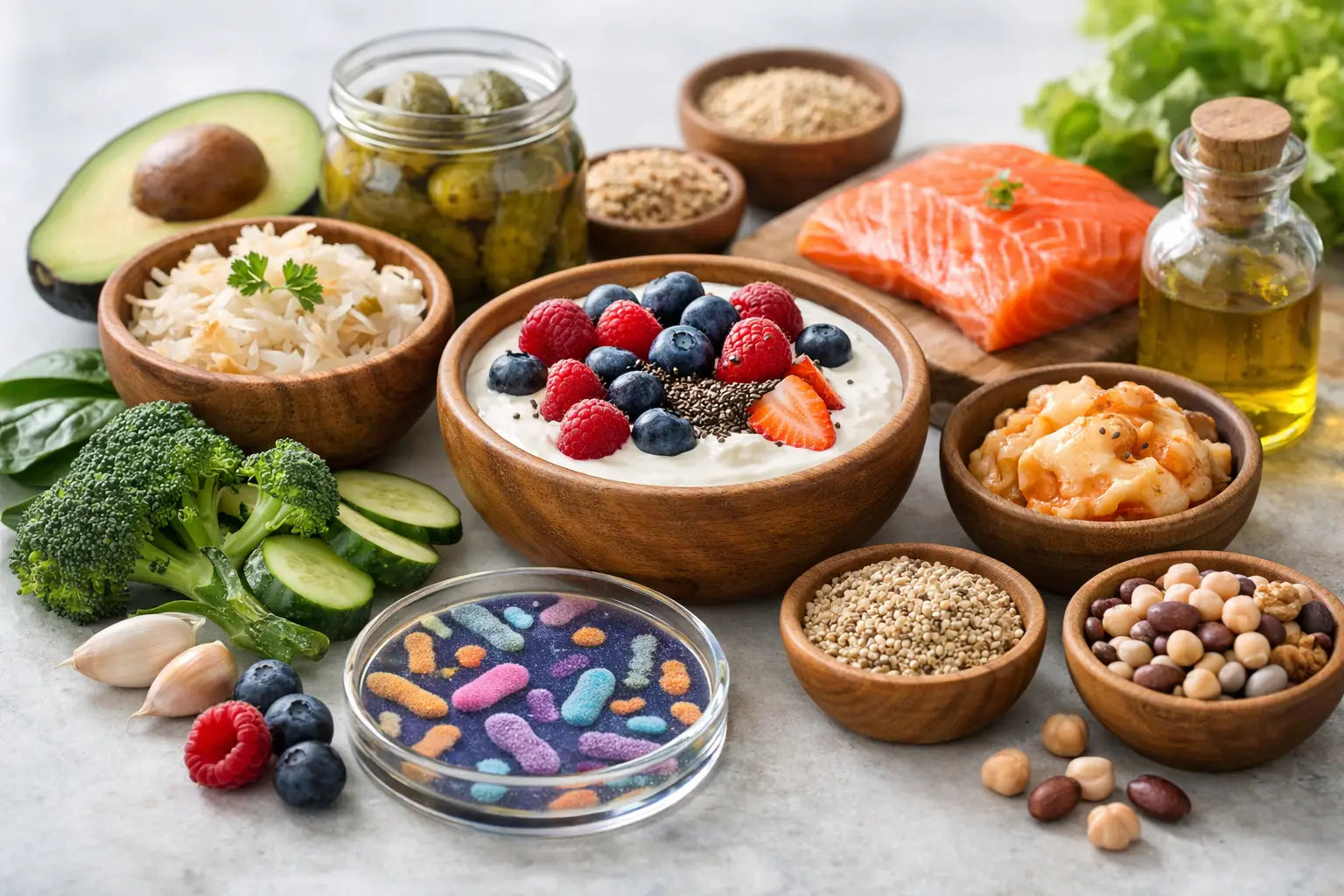
Wondering what foods are good for the gut microbiome? Learn which fiber-rich, fermented, and plant foods help support digestion and balance.
Leave a comment
All comments are moderated before being published.
This site is protected by hCaptcha and the hCaptcha Privacy Policy and Terms of Service apply.