

Your gut routine should not feel like a full-time job. Yet when bloating, irregularity, low energy, or post-meal discomfort shows up, the usual advice can sound exhausting: eat more yogurt, ferment your own vegetables, take a probiotic, cut out everything fun.
The real question behind fermented foods versus probiotic supplements is simpler: which option gives your gut what it needs consistently enough to make a difference? The answer is not a winner-takes-all battle. Fermented foods bring real nutritional value and microbial variety. A well-formulated supplement can bring precision, convenience, and targeted support. Your best move depends on your habits, your symptoms, and what you can actually stick with.
Fermented Foods Versus Probiotic Supplements: The Core Difference
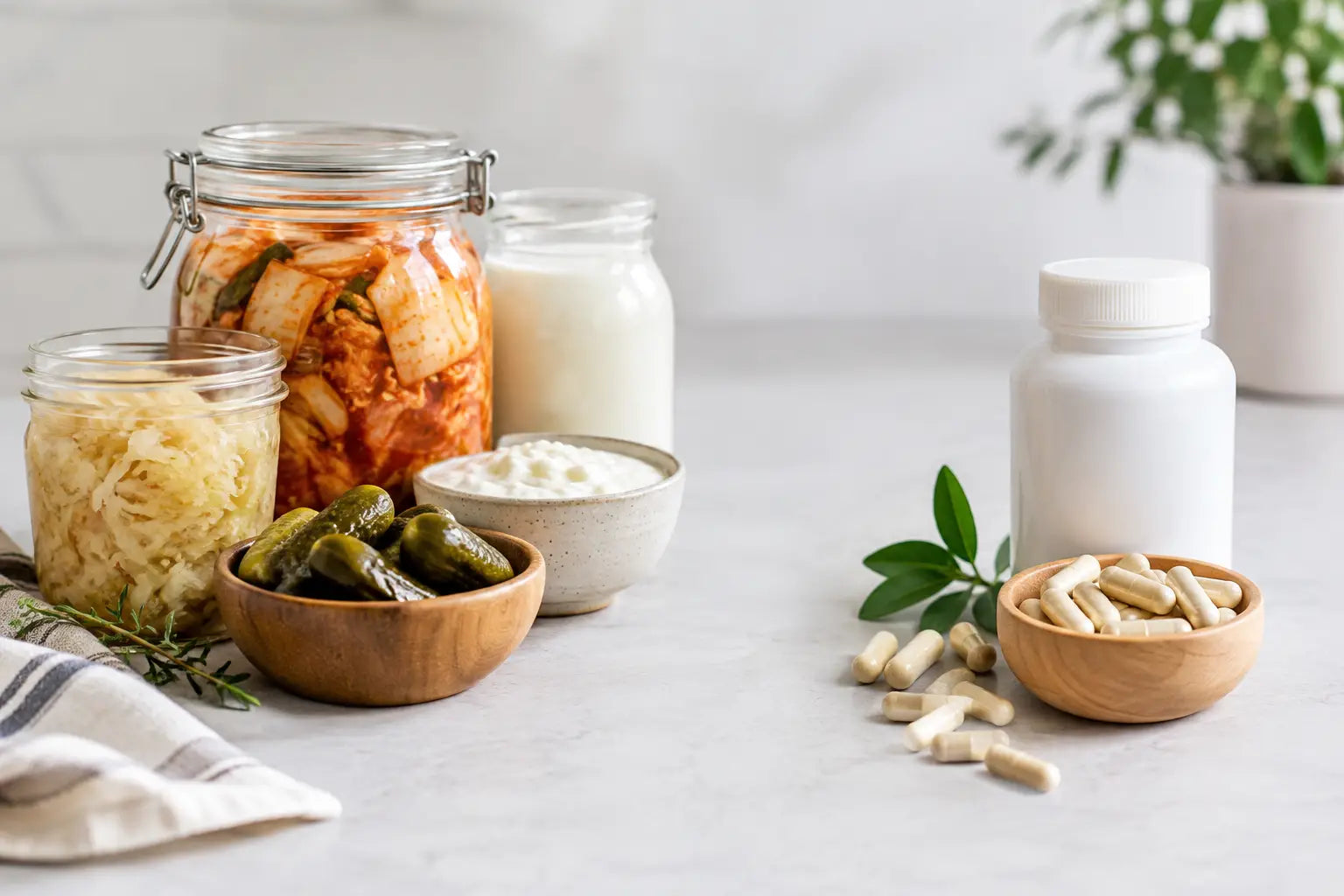
Fermented foods are foods transformed by microorganisms. Think yogurt with live and active cultures, kefir, kimchi, sauerkraut, miso, tempeh, and kombucha. During fermentation, bacteria or yeast change the food itself, producing acids, enzymes, and other compounds that affect flavor, texture, shelf life, and potentially your gut.
Probiotic supplements are designed to deliver specific live microorganisms in a measured format, usually capsules, powders, drinks, or gummies. The important word is specific. A quality product identifies the strains it contains, not just a vague promise of “billions of cultures.” Different strains can behave differently in the body, which is why probiotic shopping is more nuanced than chasing the biggest CFU number on the label.
Here is the plot twist: not every fermented food is a probiotic food. A fermented product may contain live microbes, but those microbes are not automatically proven to deliver a particular health benefit at a particular dose. Heat processing can also reduce or eliminate live cultures. Shelf-stable sauerkraut, pasteurized kombucha, and many packaged fermented foods may still be delicious, but they may not provide the living microbes you expected.
What Fermented Foods Do Well
Fermented foods earn their wellness reputation for good reason. They are food first, which means they can deliver nutrients beyond bacteria. Yogurt and kefir may provide protein and calcium. Kimchi and sauerkraut can add vegetables, flavor, and fiber. Tempeh provides plant protein. That broader nutrition picture matters because your microbiome does not thrive on microbes alone. It needs a steady stream of fiber-rich plant foods to help beneficial organisms do their work.
Fermentation can also make some foods easier for certain people to digest. For example, bacteria in yogurt and kefir can break down some lactose. That does not make these foods a guaranteed fit for everyone with lactose intolerance, but it may explain why some people tolerate them better than regular milk.
There is also a behavior benefit. Adding a serving of kefir to breakfast or kimchi to a grain bowl can make gut-friendly eating more enjoyable. The best gut habit is rarely the most complicated one. It is the one that keeps showing up on your plate.
Still, fermented foods have limitations. Their live culture content can vary dramatically by product, batch, storage conditions, and preparation. Serving sizes are not always realistic, especially for foods high in sodium or added sugar. And if you are dealing with active IBS-like symptoms, histamine sensitivity, or a sensitive stomach, suddenly loading up on fermented foods can make gas, cramping, or urgency worse before it gets better.
Where Probiotic Supplements Have an Edge
Supplements solve a different problem: consistency. Rather than hoping your lunch contains enough of the right live cultures, a thoughtfully made probiotic provides a repeatable daily dose in a format that fits real life.
That matters when you want a more targeted approach. Research on probiotics is strain-specific, meaning the results seen with one strain do not automatically apply to every product labeled “probiotic.” Look for a formula that names its organisms clearly and explains why they are included. Transparency beats mystery blends every time.
A supplement can also be easier to use during travel, busy workweeks, or seasons when your diet is less than picture-perfect. You do not need refrigerator space, meal prep skills, or a taste for tangy foods. For people who know they will not eat fermented foods regularly, a daily supplement can reduce the gap between good intentions and an actual routine.
But supplements are not magic gummies, capsules, or powders. More CFUs do not automatically mean better results. A higher count can be irrelevant if the strains are poorly matched, unstable, or not delivered effectively. Results also take time. Your gut ecosystem is a living community, not a light switch. Give any new routine several weeks unless it clearly causes discomfort.
Quality matters, too. Choose brands that are clear about strains, storage guidance, expiration dates, and testing standards. If a label makes giant promises while hiding the basics, that is your cue to keep scrolling.
Why the Best Gut Strategy Is Usually Both
The most useful way to think about this is not fermented foods or probiotic supplements. It is food foundation plus targeted support.
Fermented foods can contribute dietary diversity, nutrients, and enjoyable daily rituals. Supplements can offer dependable, selected strains without requiring you to build every meal around cultured foods. Together, they make more sense than either one trying to carry your entire wellness routine.
There is one more layer worth knowing: probiotics are only one part of the microbiome conversation. Prebiotics are fibers and compounds that feed beneficial gut microbes. Postbiotics are beneficial compounds made during microbial fermentation. A full-spectrum approach considers all three, because adding probiotics without giving your resident microbes anything useful to eat is a bit like inviting guests over without stocking the kitchen.
This is where a tribiotic formula, such as The Gut Gummy’s GG-360™, fits into a modern gut routine. The goal is not to replace vegetables, fermented foods, or balanced meals. It is to make microbiome support easier to practice consistently, especially when life is moving fast and your digestion is sending signals that your current routine needs backup.
How to Choose Based on Your Actual Life
If you already enjoy fermented foods and eat them several times a week, keep going. Focus on variety, watch added sugar and sodium, and choose products that state they contain live cultures when that is your goal. Pair them with beans, oats, berries, vegetables, nuts, seeds, and other fiber-rich foods that help nourish your existing gut community.
If you rarely eat fermented foods, dislike the taste, travel often, or want a more standardized routine, a probiotic or tribiotic supplement may be the more practical starting point. Start with the recommended serving, take it consistently, and avoid changing five other habits at the same time. That makes it easier to notice what is helping.
If bloating is your main concern, go slowly with both. Large amounts of fermentable foods, fiber, and probiotics can all change gas production. A small serving of kefir or yogurt a few times a week may be a gentler entry point than a refrigerator full of kombucha and kimchi. Likewise, if a supplement does not agree with you, pause and reassess rather than forcing it.
People who are immunocompromised, seriously ill, pregnant, or managing a diagnosed digestive condition should check with a qualified healthcare professional before starting a new probiotic regimen. Gut health is exciting science, but personalized care still matters.
A Smarter Daily Gut Habit
Your microbiome responds to patterns, not perfection. A fermented snack once a month will not transform your gut, and a premium supplement cannot outwork a diet built entirely around ultra-processed convenience foods. But small, repeatable choices add up.
Try building one anchor habit: take your supplement with breakfast, add yogurt to your weekday rotation, or keep a fiber-forward lunch option ready for busy days. Then pay attention to the signals that matter to you, from comfort after meals to regularity and energy. The goal is not to have the most impressive gut-health routine. It is to build one your gut can count on.

By GG – your glam guide to gut health, dishing the microbiome gossip straight from the Upper Intestine
🗽✨
Read more

This gut brain connection guide explains how your microbiome, stress, food, sleep, and daily habits can shape digestion, mood, and everyday resilience.
This microbiome support guide shows how food, fiber, sleep, and tribiotic habits can help support digestion, mood, immunity, and everyday energy each day.
Leave a comment
All comments are moderated before being published.
This site is protected by hCaptcha and the hCaptcha Privacy Policy and Terms of Service apply.