

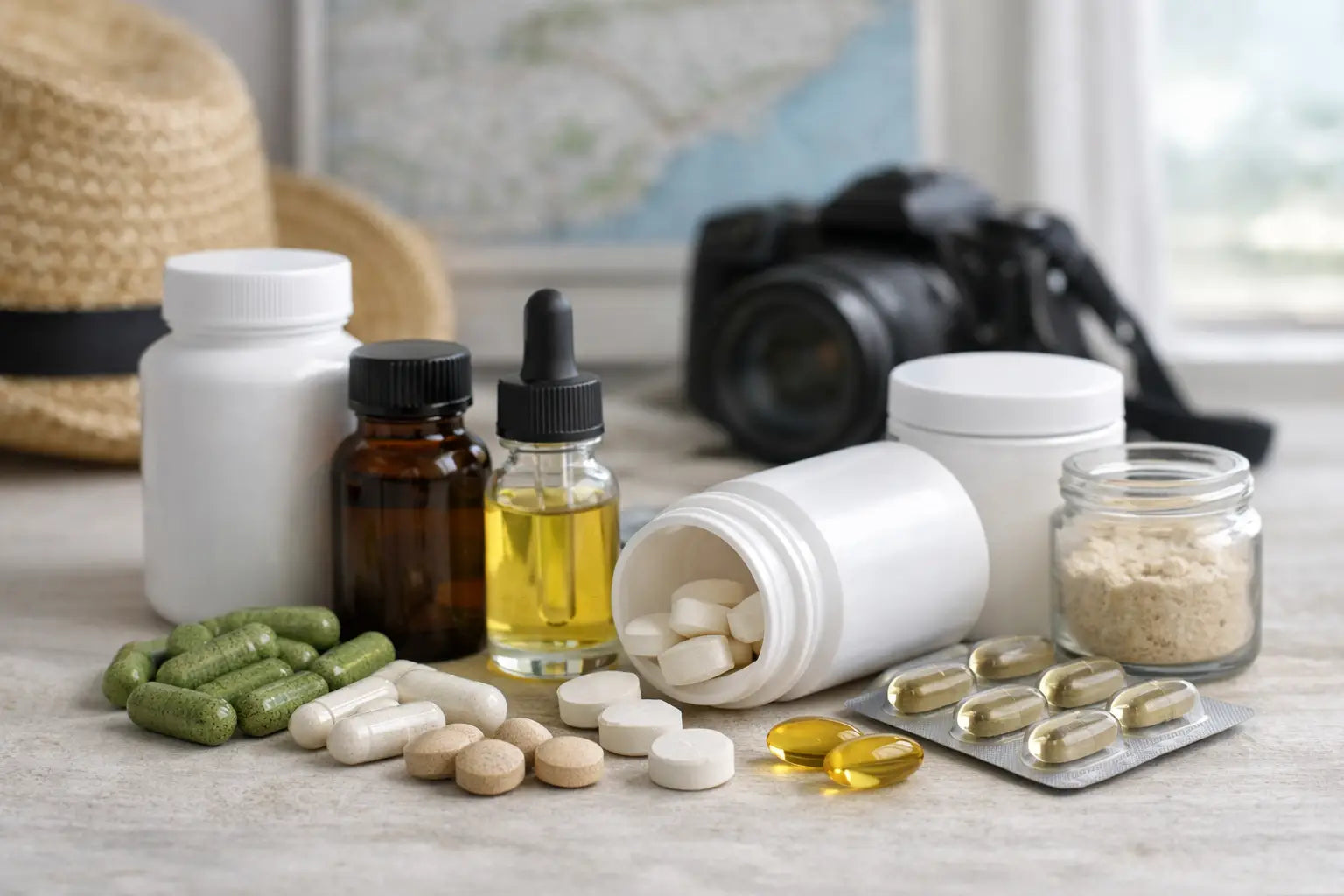
A 6 a.m. airport coffee, a day spent sitting still, restaurant meals at odd hours, and a time-zone jump can turn even a normally reliable gut into a protest zone. That is why the best supplements for travel digestion are not about packing every pill in the wellness aisle. They are about choosing a few evidence-informed tools that match what travel actually does to your routine, hydration, food choices, and microbiome.
The right pick depends on your usual pattern. Are you prone to vacation constipation? Do rich meals leave you bloated? Does nervous-system stress show up in your stomach before boarding? Start there. A smart travel gut routine should feel simple enough to maintain from your kitchen to a hotel room.
Why travel changes your digestion
Your gut loves patterns. Travel disrupts nearly all of them at once: sleep timing, meal timing, movement, water intake, food variety, and stress levels. Sitting for hours can slow intestinal transit. Dehydration can make stools harder to pass. New foods and bigger portions may increase gas, while jet lag can throw off the body’s natural digestive rhythm.
There is also the gut-brain connection. Your digestive tract and nervous system constantly exchange signals, so pre-flight nerves or an overscheduled itinerary can affect motility, nausea, and abdominal comfort. This is not a sign that your gut is being dramatic. It is biology doing biology.
Supplements can support the system, but they cannot fully compensate for three days of too little water, no produce, and zero movement. Think of them as travel insurance for your routine, not a permission slip to ignore it.
The best supplements for travel digestion
1. A tribiotic for everyday microbiome support
If you want one foundational travel supplement, look beyond a standard single-strain probiotic. A tribiotic combines prebiotics, probiotics, and postbiotics - three complementary ways to support the gut ecosystem.
Probiotics are live beneficial microorganisms. Prebiotics are fibers and compounds that help beneficial microbes thrive. Postbiotics are beneficial compounds produced through microbial fermentation or supplied in stabilized form. Together, they offer a more complete approach than simply adding more live bacteria and hoping they survive the trip.
This is especially useful for travelers whose digestion gets unpredictable when meals, sleep, and stress are all off schedule. A daily tribiotic may help support digestive regularity and a balanced gut environment over time. The key phrase is over time. It is not a same-day fix for an overindulgent dinner, so begin well before your departure rather than tossing it into your carry-on at the last minute.
For a convenient option, The Gut Gummy™ GG-360™ puts prebiotics, probiotics, and postbiotics into a daily gummy format. That matters when you are trying to simplify a travel routine, not manage a pharmacy-counter collection of capsules and powders.
2. Ginger for nausea and unsettled stomachs
Ginger earns its travel reputation. It is one of the more practical options for motion-related nausea, mild queasiness, and that vaguely unsettled feeling that can come with early flights, car rides, or boat days. Capsules, chews, tea, and standardized extracts can all fit the bill, though the dose and added sugar vary widely by format.
Choose ginger when nausea is the headline symptom. It is not designed to fix constipation, food poisoning, or persistent reflux. People who take blood-thinning medication, have gallbladder disease, or are preparing for surgery should ask a clinician before using concentrated ginger supplements.
3. Peppermint oil for occasional cramping and gas
Enteric-coated peppermint oil is another targeted tool, particularly for occasional abdominal cramping, gas, and bloating. The enteric coating helps the capsule move through the stomach before releasing, which can reduce peppermint-flavored burps and direct the ingredient farther down the digestive tract.
Peppermint is not right for everyone. It can worsen heartburn or reflux because it may relax the muscle that helps keep stomach contents from moving upward. If reflux is part of your travel story, skip peppermint oil and focus on slower eating, smaller late-night meals, and a conversation with your healthcare professional if symptoms are frequent.
4. Soluble fiber for travel constipation - with a big caveat
Constipation is one of travel’s least glamorous traditions. Less water, less movement, and a lower-fiber menu can leave your gut moving at airport-delay speed. Soluble fiber, such as psyllium, can support regularity by absorbing water and adding bulk to stool.
But fiber is only helpful when water comes with it. Taking a large amount of fiber powder on a long-haul flight while barely drinking can increase bloating or make constipation feel worse. Begin with the smallest suggested serving, increase only if you tolerate it well, and drink water consistently.
If you do not normally take fiber, do not debut a high-dose product on the morning of an international flight. Your gut deserves a dress rehearsal. Test it at home for several days first.
5. Electrolytes when dehydration is driving the problem
Electrolytes are not a direct digestion supplement, but they can be useful travel support. Fluid balance affects stool consistency, energy, and how you feel after a long day in dry airplane air or hot weather. An electrolyte mix can be especially practical after heavy sweating, diarrhea, or a day when plain water has been hard to keep up with.
Look for an option that does not turn every bottle of water into a dessert. If you have kidney disease, heart failure, high blood pressure, or have been told to limit sodium or potassium, get individualized guidance first.
What to pack based on your symptoms
For most travelers, a daily tribiotic plus one symptom-specific option is plenty. If nausea is your issue, pack ginger. If your usual problem is constipation, consider soluble fiber and prioritize hydration. If occasional gas and cramping are the pattern, peppermint oil may be worth discussing with a healthcare professional, provided reflux is not part of the picture.
Avoid stacking multiple new products at once. A probiotic, prebiotic powder, magnesium product, digestive enzyme blend, laxative tea, and herbal cleanse may sound like a serious gut strategy. In reality, it can make it impossible to tell what is helping and what is causing urgent bathroom trips in an unfamiliar place.
Digestive enzymes are a special case. They can be useful for people with a diagnosed enzyme insufficiency or a known issue such as lactose intolerance, depending on the enzyme. They are not a universal antidote to large meals. If dairy reliably causes symptoms, lactase makes more sense than a broad, expensive enzyme blend with vague promises.
Timing makes the difference
Start your foundational routine one to two weeks before travel. This gives your gut time to adjust and helps you spot any sensitivity while you are close to home. Keep taking it during the trip, ideally at roughly the same time each day, but do not panic if time zones make that imperfect. Consistency beats perfection.
Use targeted options strategically. Take ginger before a motion-heavy activity if nausea is predictable. Start fiber before constipation becomes severe, with plenty of fluids. Save any product with a laxative effect for a situation where you have access to a bathroom and no major transit window ahead.
Your non-supplement basics still matter: drink water before you feel parched, walk terminal laps or take a post-meal stroll, eat something plant-forward when you can, and give yourself permission to slow down at meals. The gut notices the difference.
When supplements are not the answer
Do not self-treat severe abdominal pain, ongoing vomiting, bloody or black stools, fever, significant dehydration, unexplained weight loss, or diarrhea that persists after you return home. Those symptoms deserve medical attention, especially after international travel.
The same goes for people who are pregnant, managing chronic digestive conditions, or taking prescription medications. “Natural” does not automatically mean risk-free, and the best plan can be more personal than a travel checklist.
A well-packed carry-on can make room for a lot of things. Make room for a gut routine that is tested, targeted, and easy to repeat - then let your trip be about the memories, not the bathroom logistics.

By GG – your glam guide to gut health, dishing the microbiome gossip straight from the Upper Intestine
🗽✨
Read more
Can probiotics survive stomach acid? Learn what protects beneficial strains, why delivery matters, and how to choose a probiotic that has a real chance.

Gut immunity begins in your microbiome. Learn how food, sleep, stress, and a full-spectrum tribiotic can help support your body's natural, everyday defenses.
Leave a comment
All comments are moderated before being published.
This site is protected by hCaptcha and the hCaptcha Privacy Policy and Terms of Service apply.