

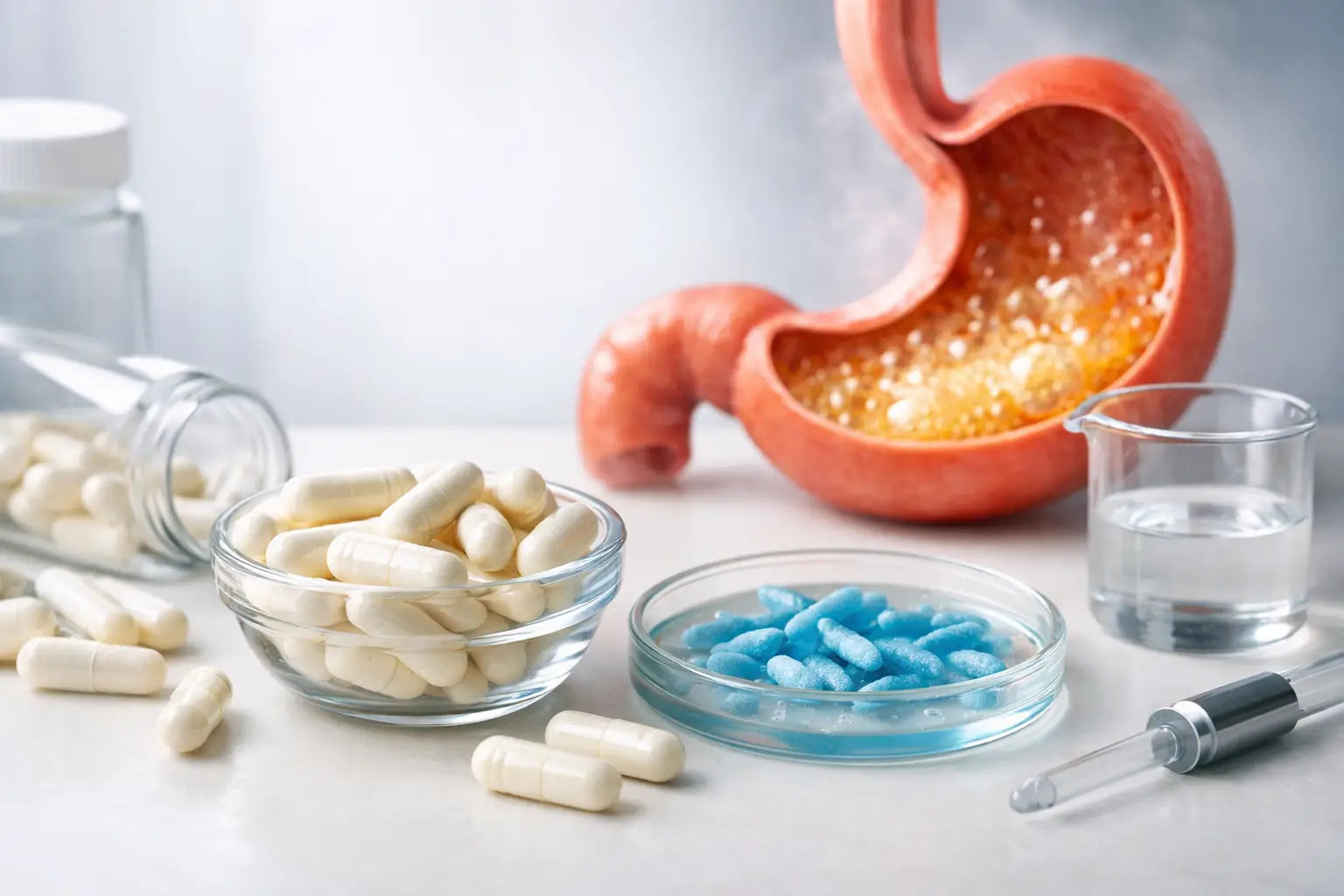
Your stomach is built to break things down. That is great news for your lunch. Less great news if you are wondering, can probiotics survive stomach acid long enough to support your gut?
The honest answer: some can, some cannot, and the difference comes down to far more than the number printed on a supplement label. A probiotic needs to survive manufacturing, sit stable on your shelf, make it through stomach acid and bile, and arrive in the intestines in a meaningful amount. That is a lot to ask from a tiny living microorganism.
The good news is that smart probiotic formulation is designed with this obstacle course in mind. Here is what actually determines whether your probiotic has a real shot at reaching its destination.
Can Probiotics Survive Stomach Acid?
Yes, certain probiotic strains can survive stomach acid, particularly when they are naturally resilient or protected by thoughtful formulation. But survival is not guaranteed simply because a product contains probiotics.
Your stomach is highly acidic, often reaching a pH of roughly 1.5 to 3.5 during digestion. That acidity helps break down food and defend you from unwanted microbes. It can also damage or kill acid-sensitive probiotic cells before they reach the small intestine and colon, where they are meant to do their work.
This is why “billions of CFUs” is only part of the story. CFU stands for colony-forming units, a measurement of live microorganisms capable of growing under specific conditions. A huge starting number may sound impressive, but it does not tell you how many organisms are still viable after time in the bottle, exposure to moisture, and a trip through your digestive system.
The better question is not just, “How many probiotics are in this?” It is, “Which strains are in this, and were they selected and delivered to survive the journey?”
The Strain Matters More Than the Hype
Probiotics are not one-size-fits-all. Different species and strains behave differently in the digestive tract, and each strain has its own characteristics, research history, and tolerance for challenging conditions.
Some of the most widely used probiotic groups include Lactobacillus, Bifidobacterium, and spore-forming Bacillus species. Many Lactobacillus strains have natural acid tolerance, although resilience varies by individual strain. Bifidobacterium strains can be more sensitive to oxygen, heat, and acid, making careful processing and storage especially relevant. Spore-forming strains are structurally tough because they can exist in a dormant, protective spore state until conditions are more favorable.
That does not mean every spore-based product is automatically better, or that every non-spore probiotic is fragile. It means the exact strain, dose, delivery method, and quality controls all matter. A label that lists full strain names is generally more informative than one that only lists broad species or uses a vague “proprietary blend.”
There is another reality check worth knowing: probiotics do not necessarily need to permanently move into your gut to be useful. Many act as temporary visitors. As they pass through, they may interact with the gut environment, support the intestinal barrier, compete for space and resources, or influence the compounds produced in the digestive tract. Consistency matters because you are supporting that beneficial interaction day after day.
What Helps Probiotics Get Past the Stomach
A well-designed probiotic can use several strategies to improve the odds of survival. Some products use acid-resistant capsules or delayed-release technology that is intended to open later in the digestive tract. Others use protective coatings, specialized drying processes, or specific combinations of strains chosen for stability.
Food can matter, too. Taking a probiotic with a meal may buffer stomach acidity for some people, creating a slightly gentler environment than taking it on an empty stomach. But timing is product-specific. If your supplement label gives directions, follow those first. The manufacturer should know how its particular formula was tested and intended to be used.
Storage is another unglamorous but powerful factor. Heat, humidity, and time can reduce viability in certain probiotic products. If a label says refrigerate, refrigeration is part of the formula, not a casual suggestion. If it is shelf-stable, that should reflect the strain selection and manufacturing approach - not a free pass to leave it in a hot car, sunny bathroom, or steamy kitchen.
A Gummy Changes the Conversation, Not the Science
Capsules have long dominated the probiotic aisle, but convenience is not a frivolous benefit. A supplement only works when it becomes a habit, and plenty of people do not want to swallow another pill or mix another powder.
A gummy format comes with its own formulation challenges. Living probiotics must remain stable in a product that may contain moisture and is meant to taste good. That makes ingredient sourcing, manufacturing controls, packaging, and shelf-life testing especially important. The format itself is not proof that probiotics will or will not survive stomach acid. The proof is in the finished formula and the quality behind it.
This is also where tribiotic support earns attention. Probiotics are the live microorganisms. Prebiotics are compounds that can help nourish beneficial microbes already in your gut. Postbiotics are beneficial compounds made through microbial fermentation or processing, and they do not need to be alive to be active in their intended role.
That distinction matters. If your wellness goal is broader digestive and whole-body support, a formula does not have to lean on one fragile mechanism alone. A full-spectrum approach, like the one behind The Gut Gummy™ GG-360™, brings probiotics together with prebiotic and postbiotic support for a more complete gut-health routine.
How to Choose a Probiotic With Better Odds
You do not need a microbiology degree to shop smarter. Start by looking beyond flashy front-label claims. A thoughtful product should identify the strains it contains, provide clear storage guidance, and explain how many CFUs are expected through the end of shelf life rather than only at the moment of manufacturing.
It is also worth matching the product to your reason for taking it. “Gut health” is broad. You may be focused on occasional bloating, regularity, digestive comfort after meals, immune support, or simply building a more consistent wellness habit. Different strains have been studied for different outcomes, so generic probiotic shopping can feel a little like buying shoes by color alone.
Look for evidence that is specific rather than vague. “Clinically studied ingredients” is more meaningful when a brand can identify what was studied and why it is included. Keep in mind that research on one strain cannot automatically be transferred to every member of the same species, much less to every probiotic product on the shelf.
Finally, give a new routine enough time. Your gut is an ecosystem, not a light switch. Some people notice changes in digestive comfort quickly, while others need several weeks of consistent use to decide whether a product fits their body and goals. More is not always better, either. Higher CFUs do not automatically mean better results if the strains are not appropriate or the formula is poorly delivered.
When Probiotics May Not Feel Great at First
A little digestive adjustment can happen when you begin a probiotic, particularly if you are also increasing prebiotic fiber. Temporary gas, changes in stool frequency, or mild bloating can occur as your gut ecosystem responds. Starting with the labeled serving and staying hydrated can help you assess how your body feels.
However, persistent or severe symptoms are not something to power through. Talk with a healthcare professional if you have a weakened immune system, a serious health condition, a central venous catheter, are pregnant, or are considering probiotics for an infant or child. If you develop concerning symptoms, stop the supplement and seek medical guidance.
The Bottom Line Is Better Than a Bigger Number
Stomach acid is not a probiotic graveyard for every strain. It is a quality test. The probiotics most likely to matter are those selected for resilience, produced carefully, stored correctly, and taken consistently in a formula that makes sense for your goals.
Your gut does not need another complicated wellness rule. It needs a habit you can actually keep - one built on more than a giant number, a trendy label, or a hope that the good stuff survives the trip.

By GG – your glam guide to gut health, dishing the microbiome gossip straight from the Upper Intestine
🗽✨
Read more
Can gut bacteria influence weight? Learn how your microbiome affects appetite, metabolism, and habits, plus practical ways to support gut health daily.

Find the best supplements for travel digestion, from tribiotics to ginger, plus smart timing tips for less bloating, constipation, and travel-day stress.
Leave a comment
All comments are moderated before being published.
This site is protected by hCaptcha and the hCaptcha Privacy Policy and Terms of Service apply.