

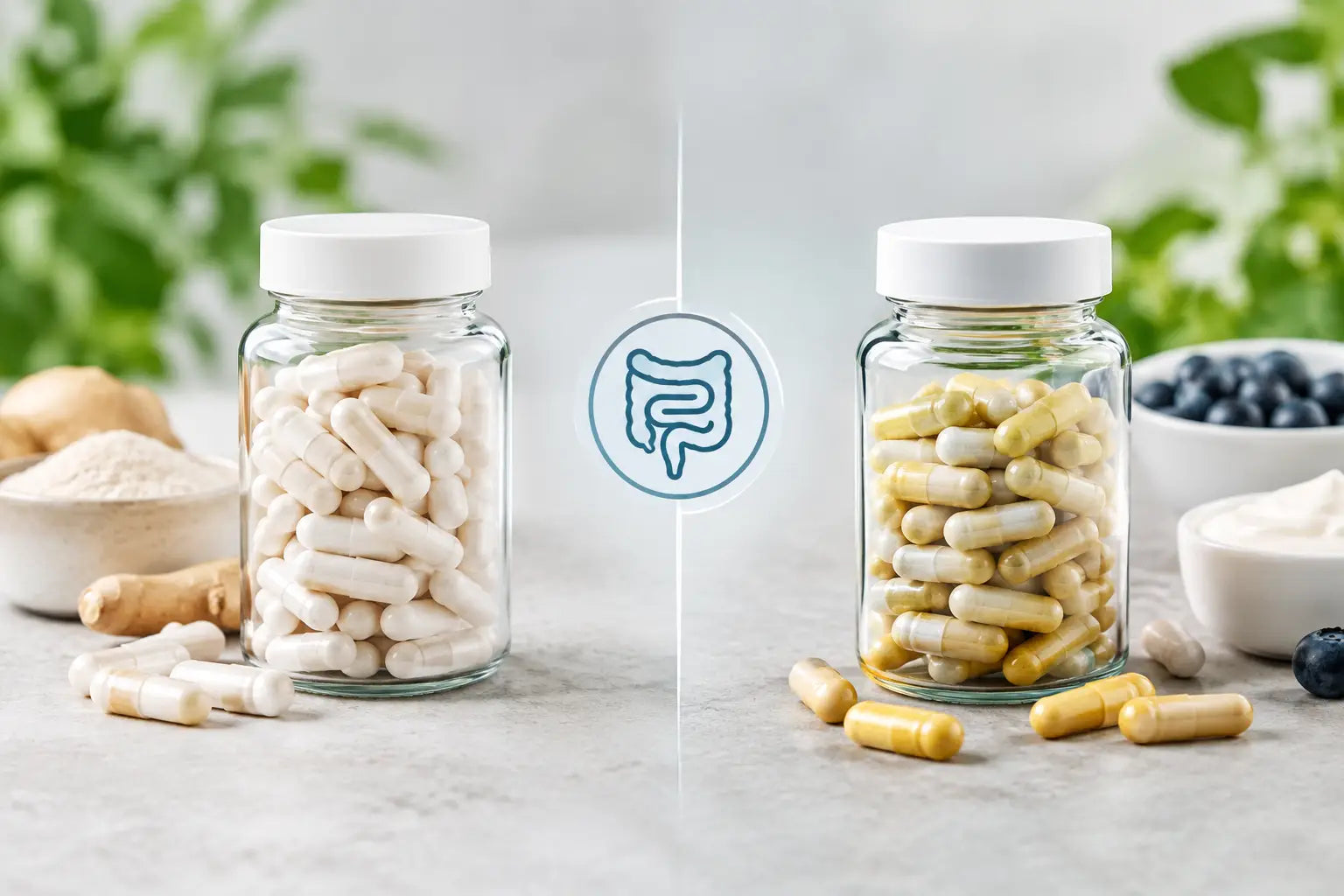
A probiotic alone can feel like bringing new houseguests into a neighborhood with no food, no infrastructure, and questionable conditions. That is why the tribiotics versus synbiotics conversation matters. Both formulas move beyond the old-school, single-strain probiotic approach, but they are not interchangeable - and the label does not always tell the whole story.
Your gut microbiome is a living ecosystem of trillions of microorganisms. It helps break down parts of food you cannot digest on your own, interacts with immune function, and communicates with systems involved in metabolism and mood. When that ecosystem is under pressure from stress, low-fiber eating, travel, antibiotics, or a packed schedule, it can show up as bloating, irregularity, or simply feeling off.
The smart question is not just, “Does this supplement contain probiotics?” It is: What else is in the formula to help create conditions where a healthier gut ecosystem can do its job?
Tribiotics versus synbiotics: start with the formula
Synbiotics and tribiotics both combine multiple gut-health ingredients. The difference comes down to which ingredients are included and how intentionally they are paired.
What is a synbiotic?
A synbiotic combines probiotics and prebiotics. Probiotics are live microorganisms that may provide a health benefit when consumed in adequate amounts. Prebiotics are compounds, often specific fibers, that are used by beneficial microbes in the gut.
Think of probiotics as the beneficial organisms and prebiotics as a targeted food source. A well-designed synbiotic aims to support the resident microbes already in your gut, the probiotic strains in the product, or both.
There are two common ways synbiotics are formulated. A complementary synbiotic includes a probiotic and a prebiotic that can each offer benefits, even if the prebiotic was not selected specifically to feed that strain. A synergistic synbiotic is more precise: its substrate is selected because the probiotic is shown to use it. That distinction is science-forward, but it is rarely obvious from front-of-pack marketing.
What is a tribiotic?
Tribiotic is a consumer-friendly term for a formula that combines three categories: prebiotics, probiotics, and postbiotics. In other words, it builds on the synbiotic concept by adding postbiotics.
Postbiotics are preparations of inactivated microorganisms and/or their components that can support health. They are not live bacteria. Depending on the ingredient, they may include beneficial microbial cells, cell fragments, or metabolites created through fermentation.
That third piece matters because your gut does not only respond to which microbes are present. It also responds to what those microbes produce and how they interact with the gut environment. A tribiotic formula is designed to support all three levels: feed helpful microbes, introduce selected live strains, and provide beneficial microbial compounds without relying solely on live organisms surviving the journey.
Why postbiotics change the conversation
Probiotics can be valuable, but they are also sensitive. A strain must be correctly identified, used at an evidence-based dose, manufactured carefully, and remain viable through shelf life. Even then, its effect depends on the person, the strain, the dose, and the specific outcome being studied.
Postbiotics offer a different route. Because they are not live, they tend to be more stable than live cultures. That can make them especially useful in formats where moisture, temperature, and shelf stability need thoughtful formulation - including gummies.
This does not mean postbiotics replace probiotics. It means they can complement them. Live cultures may contribute to the ecosystem in one way, while postbiotic compounds can interact with the gut barrier and immune system through another. The appeal of a tribiotic is the layered approach, not the idea that one ingredient category magically beats the others.
There is also a practical advantage: a broader formula can reduce the pressure placed on a single strain to do everything. Digestion, regularity, immune health, and mood-related wellness are connected, but they are not identical goals. A formula with prebiotics, probiotics, and postbiotics may better match people looking for whole-gut support rather than a narrow, one-benefit supplement.
The label detail most people miss
“Contains prebiotics and probiotics” sounds impressive. It is not enough information on its own.
A quality product should make clear what it contains. For probiotics, look for the genus, species, and strain when possible, not just a broad word like “probiotic blend.” Strain specificity matters because research on one strain does not automatically apply to another strain in the same species.
For prebiotics, consider the type and your own tolerance. Ingredients such as inulin and certain oligosaccharides can be beneficial, but rapidly increasing fermentable fiber can cause gas or bloating for some people. Starting slowly is often the more comfortable move, especially if your digestion is sensitive.
For postbiotics, specificity still counts. The term can cover different preparations, and their benefits depend on how they were made and studied. A science-savvy formula should not treat postbiotics as decorative label copy. It should identify meaningful ingredients and use them at purposeful amounts.
The bigger takeaway: do not shop by category name alone. “Synbiotic” and “tribiotic” describe a framework, not a guaranteed result. Ingredient quality, dose, testing, stability, and consistency are where that framework becomes useful.
Which option fits your gut-health goals?
A synbiotic can be a smart choice if you want a focused combination of beneficial live cultures and the fuel that supports them. It may suit someone whose main priority is adding a targeted probiotic routine and who does well with prebiotic fibers.
A tribiotic may be a better fit if you want broader daily support and prefer an all-in-one approach. By including prebiotics, probiotics, and postbiotics, it is designed for people who want to support the microbiome and its downstream effects without collecting a cabinet full of capsules and powders.
That said, more ingredients are not automatically better for every person. If you have a medically diagnosed digestive condition, are severely immunocompromised, are pregnant, or have persistent symptoms such as blood in stool, unexplained weight loss, or intense abdominal pain, get personalized medical guidance rather than trying to supplement your way around a problem.
For everyday wellness, your tolerance is a useful signal. If a prebiotic-heavy formula leaves you uncomfortable, reduce frequency or choose a lower dose while your gut adjusts. If a probiotic is marketed with huge numbers but provides no strain details, do not assume the bigger number wins. The best fit is the one you can take consistently, tolerate well, and pair with habits that nourish your microbiome.
A tribiotic works best when your routine does too
No gummy, capsule, or powder can out-muscle a lifestyle that gives your gut nothing to work with. Your microbes thrive on variety, particularly plant fibers from foods like beans, oats, berries, vegetables, nuts, and seeds. Hydration, sleep, movement, and stress management also affect the gut environment.
That is not a lecture to eat perfectly. It is good news: your daily choices can make a meaningful difference, and small upgrades count. Add one fiber-rich food at breakfast. Keep a water bottle where you can see it. Build a supplement habit around a cue you already have, like brushing your teeth or making coffee.
Convenience matters because consistency matters. A full-spectrum tribiotic gummy such as GG-360™ can make that daily gut-health habit feel less clinical and more doable. The goal is not to chase a miracle fix. It is to give your gut a steady, well-rounded foundation it can work with.
Your microbiome is not a trend, and it is not a quick project. Choose the formula that fits your needs, listen to how your body responds, and give the habit enough time to become part of your day.

By GG – your glam guide to gut health, dishing the microbiome gossip straight from the Upper Intestine
🗽✨
Read more

Learn how to support gut barrier health with food, sleep, stress care, and smart supplements that help your microbiome thrive from the inside out, daily.

Do probiotics help immunity? Learn how gut microbes influence immune defenses, what evidence supports, and how to choose a smarter daily routine at home.
Leave a comment
All comments are moderated before being published.
This site is protected by hCaptcha and the hCaptcha Privacy Policy and Terms of Service apply.