

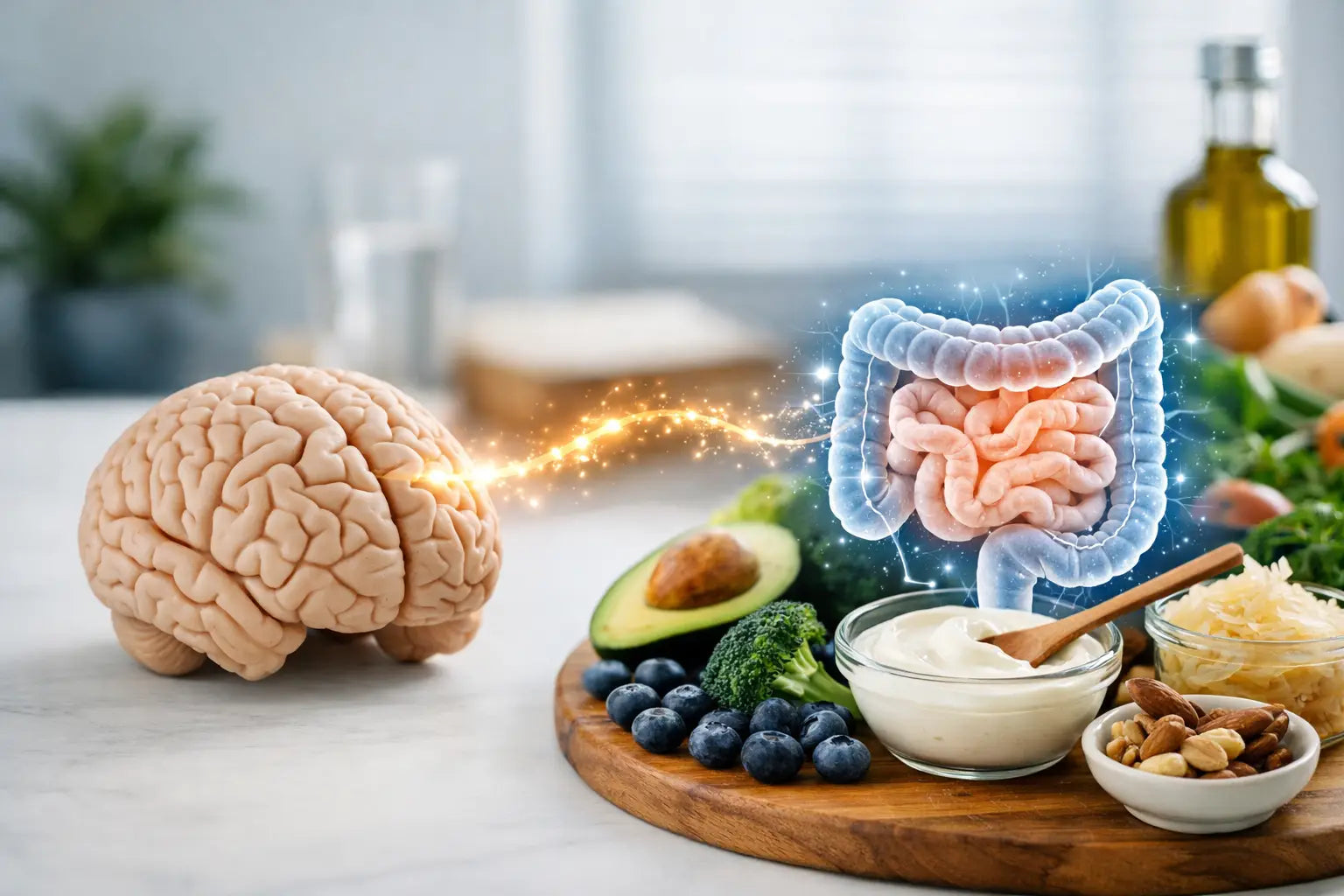
That uneasy stomach before a big meeting? The afternoon brain fog that shows up after a heavy lunch? They are not random. Your digestive system and nervous system are in constant conversation, and this gut brain axis guide gives you the practical version of what that conversation can mean for how you feel every day.
The gut-brain axis is not a wellness buzzword built around your belly. It is a real, two-way communication network involving your gut microbes, intestinal lining, immune system, hormones, and the vagus nerve. Your brain influences digestion. Your gut sends signals back. When the signals are supported, your body is better positioned for steady digestion, a more resilient mood, and the kind of energy that does not disappear at 3 p.m.
Gut Brain Axis Guide: The Connection in Plain English
Think of your gut as a busy control center, not a simple food tube. It contains its own network of nerve cells, often called the enteric nervous system, and it is home to trillions of microbes collectively known as the gut microbiome. Those microbes help break down components of food your body cannot digest on its own and create compounds that can influence the gut environment, immune activity, and signaling throughout the body.
One major route is the vagus nerve, a communication line that connects the brain and the digestive tract. Another is the immune system. A large share of the body's immune cells live around the gut, where they monitor what enters and help decide how strongly to respond. Hormones and microbial byproducts add another layer to the message stream.
This helps explain why stress can make you feel bloated, nauseated, constipated, or urgently in need of a bathroom. It also explains why a stretch of poor sleep, ultra-processed meals, or a stomach bug can leave you feeling off in more ways than one. The gut and brain do not operate as separate departments.
The serotonin fact, without the hype
About 90% of the body's serotonin is produced in the gut. That does not mean eating a certain food will instantly make you happier, or that gut health replaces mental health care. Serotonin made in the gut does not simply travel into the brain and fix your mood.
What it does show is that the digestive system plays a meaningful role in the wider chemistry and signaling systems connected to well-being. Mood is complex. So are digestion, stress, and the microbiome. The smart move is to support the whole system instead of chasing one magic molecule.
What Throws Gut-Brain Signals Off
Your microbiome is dynamic. It responds to what you eat, how you sleep, how much you move, medications, travel, illness, alcohol, and stress. A single late dinner will not wreck it. Patterns are what matter.
Chronic stress is one of the biggest signal disruptors. When your body stays in fight-or-flight mode, digestion can become less of a priority. Gut motility may change, appetite cues can get weird, and people often reach for quick comfort foods that offer short-term relief but little microbial variety.
Low-fiber eating can also leave your gut microbes underfed. Many beneficial microbes thrive on prebiotic fibers found in plant foods. When those fibers reach the large intestine, microbes ferment them and produce short-chain fatty acids, including butyrate. These compounds help support the gut barrier and create a friendlier environment for the microbial community.
Then there is sleep. A few bad nights can affect hunger hormones, food choices, and stress sensitivity. It becomes a loop: sleep poorly, crave more sugar or convenience foods, feel more stressed, and give your gut less of what it needs. No shame required. Just recognize the pattern and interrupt it where you can.
Signs Your Gut May Want More Support
Symptoms alone cannot diagnose a microbiome problem. Bloating can happen for dozens of reasons, from eating too quickly to food intolerances to a medical condition. But recurring patterns are worth paying attention to.
Notice how you feel after meals, how regular your bowel movements are, whether stress changes your digestion, and whether your energy crashes seem tied to your eating habits. A quick daily check-in can be more useful than obsessing over every sensation.
Pay closer attention if you regularly experience uncomfortable bloating, irregularity, excess gas, digestive discomfort, or a feeling that your routine is constantly throwing your stomach off. If symptoms are severe, persistent, or come with unintended weight loss, blood in the stool, fever, vomiting, or intense pain, talk with a healthcare professional promptly. Wellness habits are powerful, but they are not a substitute for medical evaluation.
How to Support the Gut-Brain Axis Without Making Life Complicated
The goal is not a perfect diet or a 14-step morning routine. It is to create repeatable inputs your gut can recognize and use. Start with food diversity. Different plants contain different fibers and polyphenols, which can help support a more varied microbial ecosystem. Berries, beans, oats, leafy greens, nuts, seeds, onions, garlic, and whole grains are all useful options, depending on your individual tolerance.
If your current fiber intake is low, go gradually. Adding a giant bowl of beans overnight may create the exact bloating you are trying to avoid. Increase portions over a few weeks, drink enough water, and give your digestive system time to adapt. The best fiber plan is the one you can actually keep doing.
Fermented foods can be another helpful tool for some people. Yogurt with live cultures, kefir, kimchi, sauerkraut, and miso may add beneficial microbes or fermentation compounds to the diet. But they are not mandatory, and they do not agree with everyone. If fermented foods worsen symptoms, do not force them.
Stress support belongs in this conversation too. You do not need to eliminate stress to help your gut. That is not realistic. A ten-minute walk after lunch, slower meals without your phone, a few deep breaths before eating, consistent movement, or a wind-down routine before bed can gently shift the nervous system out of high alert. Small actions count because they are easier to repeat.
Where tribiotics fit
Food and lifestyle build the foundation, while a quality gut supplement can make the daily habit easier. Traditional probiotics provide live microorganisms. Prebiotics provide fuel for beneficial microbes. Postbiotics are beneficial compounds produced through microbial fermentation.
A tribiotic approach brings all three categories into the same strategy. That is the thinking behind GG-360™ from The Gut Gummy™: support the ecosystem with prebiotics, probiotics, and postbiotics in one convenient gummy. It is not a permission slip to skip vegetables, sleep, or stress care. It is a practical layer for people who want more consistent support without adding another complicated powder-and-capsule routine.
When choosing any gut-focused supplement, look beyond big promises. Consider the ingredient types, whether they are clinically studied, how the product is meant to be used, and how your body responds over time. People with immune conditions, significant digestive disease, or those taking prescription medications should check with a qualified clinician before starting a new supplement.
A Better Way to Track Progress
Gut health rarely changes in a straight line. One salty restaurant meal, a stressful week, a menstrual cycle shift, or a cross-country flight can change digestion temporarily. That does not mean your routine is failing.
Instead of judging success by whether you feel perfect every day, look for trends across several weeks. Are you more regular? Is bloating less frequent or less intense? Do meals leave you comfortably satisfied? Are your energy and mood steadier when your sleep, fiber, and movement are more consistent?
This is where patience beats panic. Your gut microbes respond to repeated conditions, and durable change usually looks boring before it looks impressive. A few plants at breakfast, a walk after dinner, a consistent supplement habit, and a real bedtime can create more momentum than an aggressive cleanse ever will.
Your gut is sending messages all day long. You do not have to decode every one perfectly. Start giving it clearer, steadier signals - then notice what changes when your body has the support to answer back.

By GG – your glam guide to gut health, dishing the microbiome gossip straight from the Upper Intestine
🗽✨
Read more

Probiotic safety starts with the right strain, dose, and context. Learn who can take probiotics, who should pause, and how to choose a quality formula.

Microbiome health affects digestion, immune function, and more. Learn the everyday habits that help support a happier, more resilient gut from within.
Leave a comment
All comments are moderated before being published.
This site is protected by hCaptcha and the hCaptcha Privacy Policy and Terms of Service apply.