

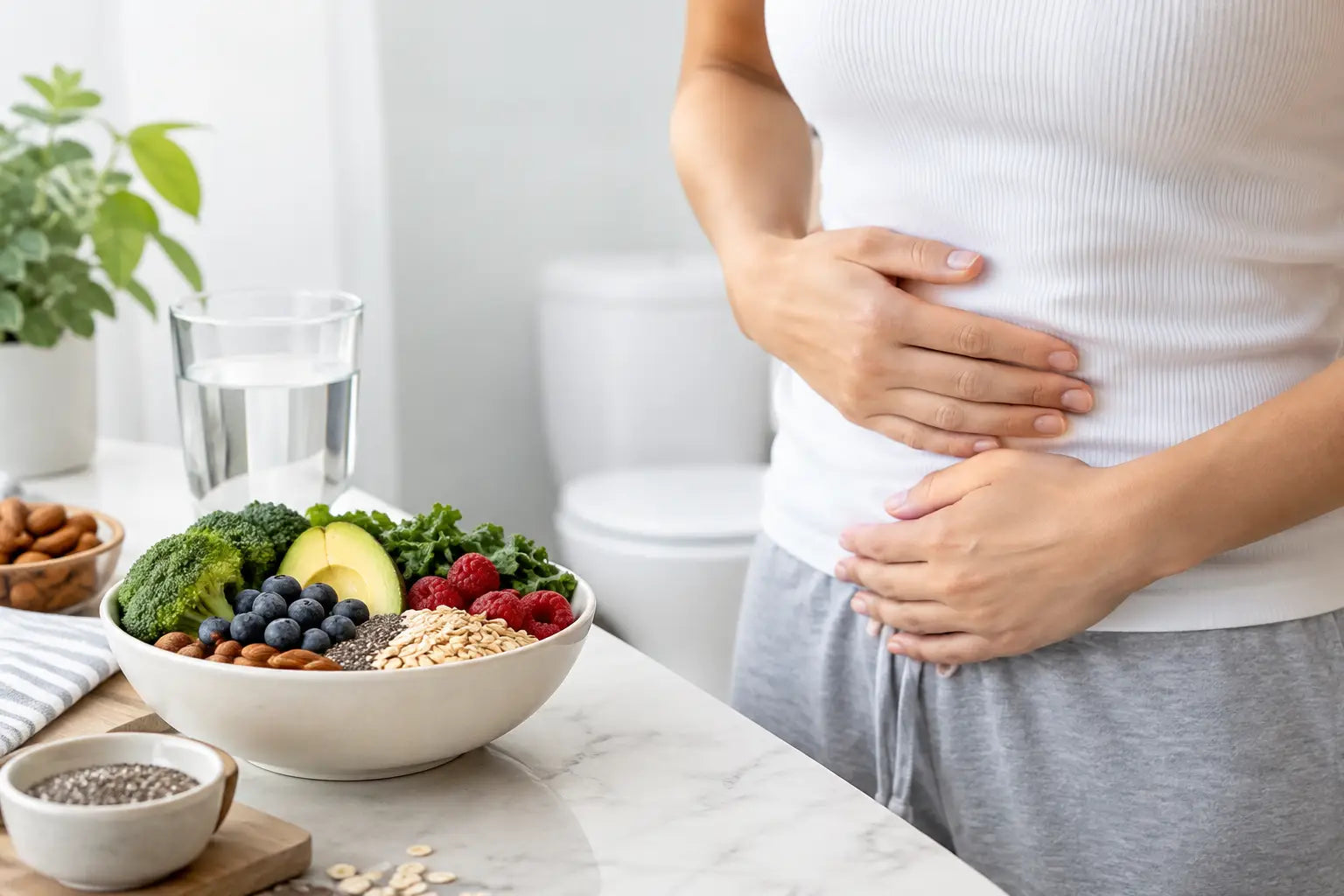
Your bathroom routine is one of the clearest signals your gut sends all day. So, does fiber affect bowel movements? Absolutely. The amount, type, and pace at which you add fiber can change stool consistency, frequency, ease, and even how bloated you feel.
Fiber is not a one-size-fits-all fix. For one person, a fiber-rich breakfast may create dependable, easy mornings. For another, suddenly adding a giant kale salad and a fiber supplement can lead to gas, cramping, and a feeling that their digestive system is filing a formal complaint. The goal is not simply more fiber. It is the right fiber routine for your body.
How Fiber Affects Bowel Movements
Fiber is the part of plant foods your body does not fully digest. Rather than being absorbed like sugar, fat, or protein, it travels into your large intestine, where it influences the water content and bulk of your stool and helps feed parts of your gut microbiome.
That matters because bowel movements need a few things to work well: enough water, enough volume, coordinated intestinal movement, and a gut environment that is not constantly being thrown off by stress, rushed meals, or ultra-processed food overload.
Fiber can support that process in two major ways. Some fibers hold onto water and help create a softer, more formed stool. Others add bulk, which can help stimulate movement through the digestive tract. Many foods contain a mix of both, so your plate does not need to become a complicated fiber math problem.
A helpful benchmark: a healthy bowel movement is usually soft, formed, and easy to pass. It should not require straining, panic, or a scroll session that lasts longer than your morning coffee.
Soluble vs. Insoluble Fiber: Why the Difference Matters
Soluble fiber helps with softness and consistency
Soluble fiber mixes with water and forms a gel-like texture in the digestive tract. Think oats, beans, lentils, chia seeds, apples, citrus, carrots, and psyllium. This type of fiber can help stool hold moisture, which is useful when things are dry, hard, or difficult to pass.
It can also be fermented by beneficial gut microbes. As microbes process certain fibers, they produce compounds called short-chain fatty acids. These compounds help support the cells lining the colon and contribute to a healthier gut environment. That is a big reason fiber is about far more than simply "going."
Soluble fiber may also help make loose stools more manageable by absorbing excess water. That does not mean it is a cure for ongoing diarrhea, especially if symptoms are severe or persistent. It does mean that the right kind of fiber can sometimes bring more consistency in either direction.
Insoluble fiber helps create bulk and movement
Insoluble fiber does not dissolve in water. It adds physical bulk to stool and may help food move through the digestive system more efficiently. You will find it in wheat bran, whole grains, nuts, seeds, beans, and the skins of many fruits and vegetables.
For people dealing with occasional constipation, this added bulk can be useful. But more is not always better. If you are prone to bloating, have a sensitive gut, or are already constipated and dehydrated, piling on coarse fiber can make discomfort worse. Your gut needs fluid to make fiber work the way you want it to.
Can Fiber Make You Poop More Often?
It can, but frequency is only one piece of the picture. Some people naturally have a bowel movement once a day. Others go several times a week and still feel comfortable, regular, and fully emptied. What matters more is your personal baseline, stool quality, and whether you are straining or feeling backed up.
When fiber intake rises gradually, people often notice more regularity and easier passing. If your diet has been low in plants and high in refined foods, adding fiber may increase stool volume first. That can feel different before it feels better.
A sudden jump, though, can create the opposite effect. Gas, abdominal pressure, and urgent trips to the bathroom are common when your microbiome and digestive system are not used to fermenting more fiber. That is not your body failing at wellness. It is feedback to slow the pace.
The Fiber-and-Water Rule That Changes Everything
Adding fiber without drinking enough fluid is like trying to make oatmeal without water. You may end up with a thicker, slower-moving situation than you planned.
Water helps soluble fiber create softer stool and helps bulk-forming fiber move through the colon. Your ideal fluid intake depends on your body size, activity level, climate, medications, and the foods you eat, but the practical move is simple: increase fluids as you increase fiber.
Start paying attention to your response. If stool becomes hard, pellet-like, or harder to pass after you add more fiber, dehydration or overly rapid changes may be part of the issue. If stool becomes loose, you may need a smaller dose of a new fiber source or a better mix of fiber types.
How to Increase Fiber Without the Bloat Spiral
Most adults fall short of daily fiber recommendations, yet going from low-fiber eating to an aggressive health kick overnight is rarely comfortable. A steady ramp-up gives your gut microbes time to adapt.
Begin by adding one fiber-forward food each day for several days. Swap a low-fiber breakfast for oats with berries, add beans to a lunch bowl, or include a piece of fruit with an afternoon snack. Then build from there. Consistency beats the occasional heroic salad.
Aim for variety, too. Different plant foods offer different fibers, and your microbiome thrives on range. Fruits, vegetables, legumes, whole grains, nuts, seeds, herbs, and spices all contribute something useful. You do not need to eat every "superfood" on the internet. You need a pattern you can repeat.
If you choose a fiber supplement, start with the smallest suggested amount and give it time. A supplement can be convenient, but it cannot replace the vitamins, minerals, polyphenols, and food enjoyment that come with a varied plant-rich diet.
Fiber, the Microbiome, and the Bigger Gut Health Picture
Fiber is fuel for more than your bowel movements. Certain fibers act as prebiotics, meaning they nourish beneficial microbes in the gut. Those microbes are part of a larger ecosystem connected to digestion, immune function, metabolism, and communication along the gut-brain axis.
That is why the best gut-health strategy is rarely a single ingredient or a one-day cleanse. It is a daily pattern: fiber-rich foods, enough water, movement, stress support, sleep, and a smart approach to supplementation when it fits your needs. A full-spectrum tribiotic formula like GG-360™ can complement that foundation by bringing prebiotics, probiotics, and postbiotics into one easy routine.
Still, if a product promises that everyone will have identical results, be skeptical. Microbiomes are personal. The foods, habits, medications, hormones, and health history shaping your gut are personal too.
When More Fiber Is Not the Right First Move
Fiber is broadly beneficial, but persistent digestive symptoms deserve more than a guess. Talk with a healthcare professional if you have blood in your stool, unexplained weight loss, severe abdominal pain, fever, vomiting, a new major change in bowel habits, or constipation that does not improve.
People with certain digestive conditions may need individualized fiber guidance. During an inflammatory bowel disease flare, after some surgeries, or with known narrowing in the digestive tract, high-fiber foods may not be appropriate. If you follow a low-FODMAP plan for irritable bowel syndrome, the type of fiber matters even more because some fermentable foods can worsen symptoms.
There is no prize for forcing down foods that make you miserable. The win is finding a level and type of fiber that supports comfortable, predictable digestion.
Your next grocery cart can be a gut-health tool. Add one plant food you genuinely like, drink a little more water, and give your body a week or two to respond. Small changes are often where better bathroom days begin.

By GG – your glam guide to gut health, dishing the microbiome gossip straight from the Upper Intestine
🗽✨
Read more
Find the best supplements for gut lining support, how pre-, pro-, and postbiotics work, and when symptoms need a clinician's input plus daily gut care.

Searching for the best probiotics for women? Learn how strains, delivery, prebiotics, and your goals shape a smarter daily gut-health routine for you.
Leave a comment
All comments are moderated before being published.
This site is protected by hCaptcha and the hCaptcha Privacy Policy and Terms of Service apply.